

The best low acid coffee for most people is Lifeboost Medium Roast. It’s a single-origin, USDA organic coffee from Central America, it costs $28.99 for 12 oz, and it’s rated 4.4 stars across more than 1,600 Amazon ratings. If you want the lowest-acid option on a budget, Folgers Simply Smooth costs $16.49 for a 23 oz canister and is made to be gentler on the stomach.
Here’s the honest answer first. All coffee is acidic. Regular hot coffee sits around pH 4.85 to 5.10 in a 2018 lab study, and “low acid” brands usually claim somewhere in the mid-5s to low-6s. That gap is real but small, and lab results vary by roast and brew method. Many people with a sensitive stomach still find a darker roast or cold brew noticeably easier to drink, which is why we cover both the coffees and the brewing tricks below.
A quick health note: if you have GERD, ulcers or frequent heartburn, talk to your doctor before switching coffees. Low acid coffee isn’t a treatment, and for some people the caffeine itself is the trigger.
Quick Comparison
| Coffee | Best For | Roast | Format | Price (Oct 5, 2026) |
|---|---|---|---|---|
| Lifeboost Medium Roast | Best Overall | Medium | Whole bean, 12 oz | $28.99 |
| Lifeboost Dark Roast | Best Dark Roast | Dark | Ground, 12 oz | $28.99 |
| Puroast House Blend | Highest Reported pH | Medium | Ground, 12 oz | $23.84 |
| Purity Coffee EASE | Best Specialty-Grade | Dark | Whole bean, 12 oz | $29.00 |
| Volcanica Low Acid Blend | Best Value | Medium | Whole bean, 16 oz | $19.99 |
| Folgers Simply Smooth | Best Budget | Mild | Ground, 23 oz | $16.49 |
| Lifeboost Decaf K-Cups | Best K-Cups | Medium | Pods, 10 count | $18.99 |
| Lifeboost Decaf | Best Decaf | Medium | Whole bean, 12 oz | $28.00 |
| Lifeboost Cold Brew | Best for Cold Brew | Medium | Coarse ground, 12 oz | $27.99 |
What “Low Acid” Actually Means
When a coffee says “low acid”, it usually means the brewed cup has a higher pH than normal coffee. The pH scale runs from 0 (very acidic) to 14, with 7 as neutral. In a 2018 study in Scientific Reports, hot brewed coffee measured pH 4.85 to 5.10 and cold brew measured 4.96 to 5.13.
pH isn’t the whole story. The same study found hot coffee had noticeably higher titratable acidity, which is the total amount of acid in the cup, even when pH looked similar. So two coffees with the same pH can still feel different on your stomach.
There’s also a second idea that gets mixed up with the first: how much acid your stomach makes after drinking coffee. Research from the University of Vienna, reported in 2010, linked a compound called N-methylpyridinium, which is higher in dark roasts, to lower stomach acid production. That was early research, but it helps explain why many people find dark roasts gentler.
Why brand pH numbers don’t match: you’ll see very different figures for the same brand. Homegrounds reports pH 6.23 for Lifeboost’s Embolden dark roast, while a ranking published by Puroast lists Lifeboost at 5.10. Brew strength, roast batch, water and the lab all change the result. Treat any single pH number as a rough guide, not a guarantee.
If your coffee tastes sharp or tangy rather than just upsetting your stomach, that’s flavor acidity, which isn’t the same thing. Our guide on why coffee tastes sour covers that.
Best Low Acid Coffee Beans and Grounds
Lifeboost Medium Roast – Best Overall

Lifeboost is the brand most low acid coffee guides lead with, and it earns the spot on consistency and sourcing. It’s a single-origin arabica, shade grown at high elevation in Central America, then sun dried and washed with spring water. Lifeboost says the beans are naturally low in acid.
The medium roast is the safest starting point. It tastes balanced and smooth rather than roasty, so it works black or with milk. Lifeboost also says every batch is third-party tested for mycotoxins, heavy metals, pesticides and “400 other toxins”. That’s a brand claim, but it’s a more detailed one than most coffees make.
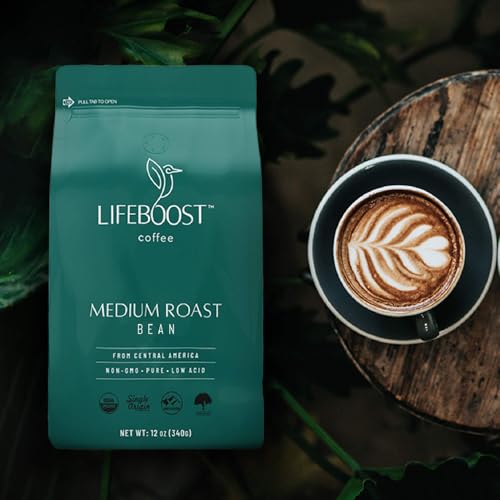
It’s rated 4.4 stars across more than 1,600 Amazon ratings. The whole bean bag keeps fresher longer. If you don’t own a grinder, the ground version costs the same and has more than 2,300 ratings.
Specs: 12 oz whole bean, medium roast, single origin Central America, USDA Organic, non-GMO, third-party tested per the brand.
Pros: Smooth and balanced, detailed testing claims, available as beans, grounds, K-cups, decaf and cold brew.
Cons: About $2.40 per ounce, which is roughly double a supermarket coffee. No published pH on the Amazon listing.
Not the right fit if: you drink a full pot a day and need a budget option. Folgers Simply Smooth or Volcanica will cost far less.
Lifeboost Dark Roast – Best Dark Roast
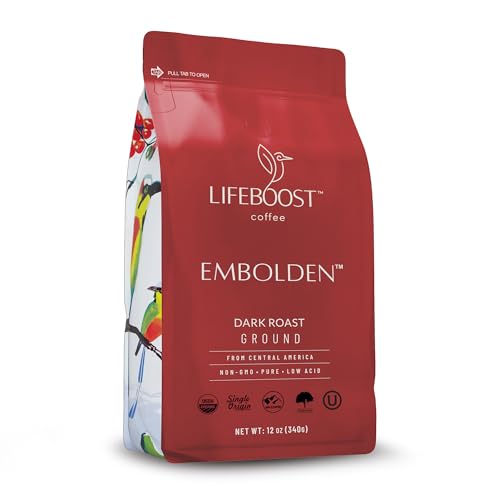
If your stomach struggles with coffee, the dark roast is the Lifeboost to try first. It’s the same single-origin, organic Central American coffee as the medium roast, taken darker. Darker roasts are the ones linked to lower stomach acid production in the research above, and Homegrounds reports Lifeboost’s Embolden dark roast at pH 6.23, one of the highest figures we found for any brand.
Expect a fuller, chocolatey cup with less brightness. It holds up well with milk and in a French press.
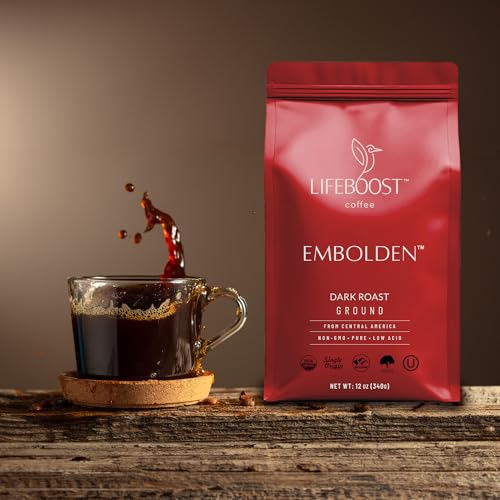
It’s rated 4.3 stars across more than 1,100 Amazon ratings and costs $28.99 for 12 oz of ground coffee.
Specs: 12 oz ground, dark roast, single origin Central America, USDA Organic, third-party tested per the brand.
Pros: Dark roast for a gentler cup, highest third-party pH figure we found, smooth with milk.
Cons: Premium price, and the pH figure comes from a review site, not a lab report Lifeboost publishes on the listing.
Not the right fit if: you like bright, fruity coffee. A dark roast won’t give you that.
Puroast House Blend – Highest Reported pH

Puroast uses a patented, slow roasting process and claims “5X less acid” on its listing. In a ranking Puroast publishes on its own site, it lists itself at pH 5.82 from testing by LACCSA, the highest figure in that table. Keep in mind that the brand published that ranking itself.
The organic House Blend is a medium roast with full caffeine. It’s ground, so it’s ready for a drip machine or pour-over.

The 12 oz organic bag costs $23.84 and is rated 4.0 stars across about 700 ratings. The larger 2.2 lb House Blend is much better value at $37.76 and rates 4.2 stars across more than 1,800 ratings.
Specs: 12 oz ground, medium roast, USDA Organic, full caffeine, patented roasting process.
Pros: Highest pH claim we found, value-size bag available, also comes as French Roast and pods.
Cons: The pH ranking is self-published, ratings are lower than Lifeboost’s, and the organic 12 oz bag is pricey per ounce.
Not the right fit if: you want whole beans. These are ground.
Purity Coffee EASE – Best Specialty-Grade Low Acid Coffee
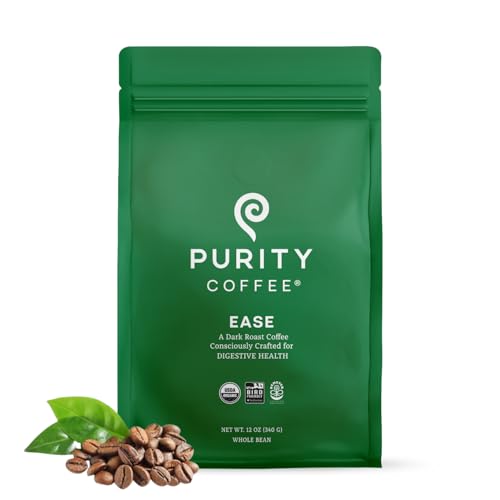
Purity is built for health-focused coffee drinkers. EASE is its dark roast made “with easy digestion in mind”, using specialty-grade, USDA organic arabica. Purity says it’s also Rainforest Alliance and Smithsonian Bird Friendly, and it flushes bags with nitrogen to keep the beans fresh.
The taste is a smooth dark roast without the burnt edge some dark coffees have.
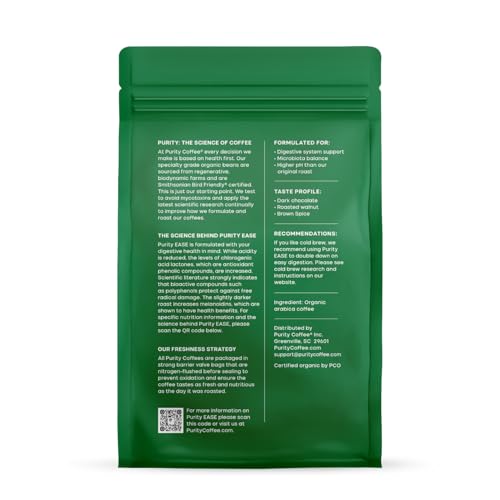
It costs $29.00 for 12 oz and is rated 4.3 stars across about 1,000 ratings. Purity also sells EASE as ground coffee, K-pods and single-serve sachets.
Specs: 12 oz whole bean, dark roast, specialty-grade USDA Organic arabica, nitrogen-flushed bag.
Pros: Specialty-grade beans, many certifications, several formats including pods.
Cons: The most expensive coffee here, and “gentle on the gut” is a brand claim without a published pH on the listing.
Not the right fit if: price matters more than sourcing.
Volcanica Low Acid Blend – Best Value

Volcanica is a specialty roaster, and its Low Acid Blend is the best-priced craft option here at $19.99 for a full 16 oz. Volcanica says it’s roasted to reduce acidity and lists a pH of 5.3, against a typical coffee of around 4.7 by its own comparison.
It’s a washed-process medium roast with listed notes of chocolate, nuts and tangerine. It’s brighter than the dark roasts here, so it suits people who still want some flavor lift.

It’s rated 4.2 stars across about 500 ratings. A ground version is the same price.
Specs: 16 oz whole bean, medium roast, washed process, brand-stated pH 5.3, tested for mycotoxins and mold per the brand.
Pros: Lowest price per ounce among specialty picks, a published pH figure, more flavor than most low acid coffees.
Cons: Not certified organic, and the pH is the brand’s own number.
Not the right fit if: your stomach is very sensitive. Start with a dark roast instead.
Folgers Simply Smooth – Best Budget
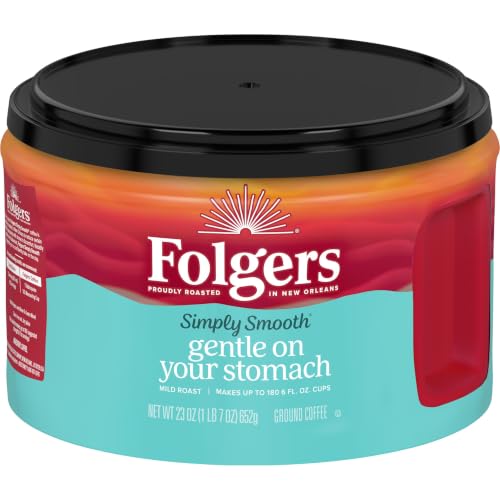
Not everyone needs a $29 bag. Folgers Simply Smooth is a mild roast that Folgers says is “specially roasted to reduce certain irritants associated with stomach discomfort”. At $16.49 for 23 oz, it costs about a quarter of the premium brands per ounce.
It tastes like classic, mellow supermarket coffee, which is exactly what many people want from a daily pot.
It’s rated 4.6 stars across more than 2,600 ratings, the highest rating here. A decaf version is also available.
Specs: 23 oz AromaSeal canister, ground, mild roast.
Pros: Cheapest per cup, highest rating here, easy to find.
Cons: Not organic or single origin, and Folgers doesn’t publish a pH figure on the listing.
Not the right fit if: you care about sourcing or specialty flavor.
Best Low Acid K-Cups
Lifeboost Organic Decaf K-Cups – Best Low Acid K-Cups
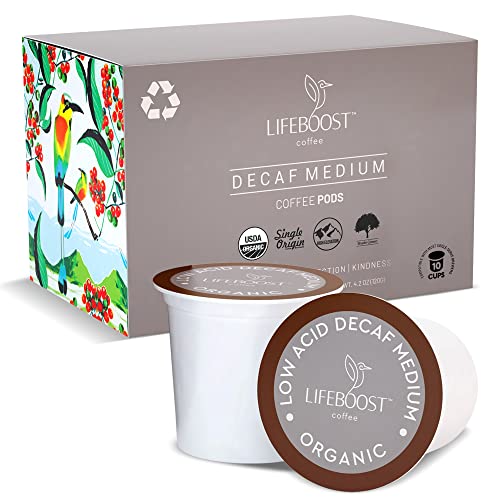
Pod coffee is where low acid options are thinnest, and Lifeboost’s decaf pods are the best-rated we found. They’re the brand’s organic medium roast decaf in Keurig and Keurig 2.0 compatible pods. They’re rated 4.4 stars across about 770 ratings, at $18.99 for 10 pods.
That’s about $1.90 per pod, so these are a treat rather than a daily bulk buy. If you want caffeine, Lifeboost also sells regular medium roast K-cups at $17.99 for 10. Puroast sells cheaper low acid pods too, though they rate lower at 3.7 stars.
Specs: 10 pods, organic decaf, medium roast, Keurig 1.0 and 2.0 compatible.
Pros: Best-rated low acid pods we found, decaf and caffeinated options, organic.
Cons: Expensive per cup, and small 10-count boxes.
Not the right fit if: you go through several pods a day. A larger box or ground coffee in a reusable pod is cheaper. See our single-serve brewer guide for machines that take grounds too.
Best Low Acid Decaf
Lifeboost Decaf – Best Low Acid Decaf
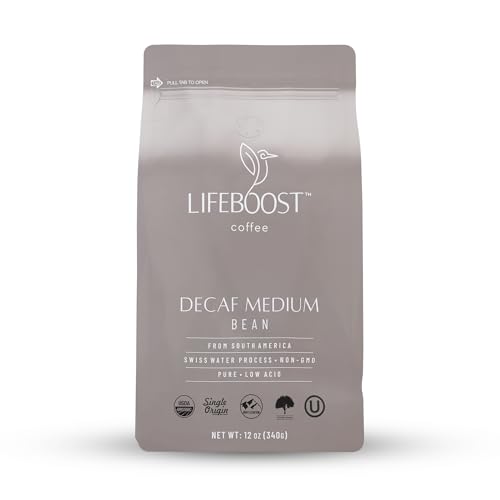
If caffeine is part of your problem, decaf is worth trying alongside a low acid coffee. Lifeboost decaf uses the Swiss Water Process, which removes caffeine with water instead of chemical solvents. It’s the same single-origin, organic medium roast as the top pick, at $28 for 12 oz of whole beans.
For a cheaper decaf, Kicking Horse Decaf is also Swiss Water processed, is a dark roast, and cost $15.10 for 10 oz when we checked. It doesn’t make low acid claims, but its dark roast may be gentler for some people. More picks are in our decaf coffee beans guide.
Specs: 12 oz whole bean, medium roast, Swiss Water Process decaf, USDA Organic.
Pros: Solvent-free decaf, organic, from the same farm-sourced line as our top pick.
Cons: Premium price for decaf.
Not the right fit if: you want a dark decaf. Kicking Horse is darker and cheaper.
Best Low Acid Coffee for Cold Brew
Lifeboost Low Acid Cold Brew – Best for Cold Brew
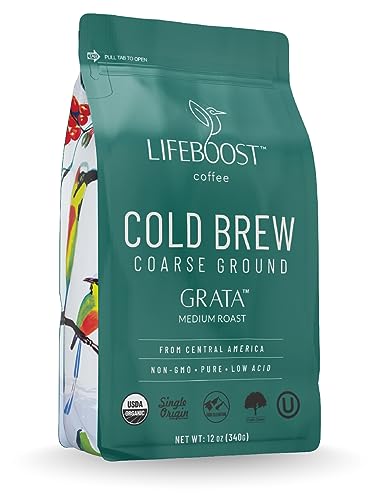
Cold brew already extracts fewer acids than hot brewing, so pairing it with a low acid coffee is the gentlest combination here. Lifeboost sells a coarse-ground medium roast made for slow steeping. It’s organic, single-origin arabica, at $27.99 for 12 oz, and rated 4.4 stars across about 130 ratings.
The coarse grind matters. Fine grounds turn cold brew muddy and can taste bitter. A dark roast cold brew version is also available.
Specs: 12 oz coarse ground, medium roast, USDA Organic, single origin.
Pros: Ground for cold brew out of the bag, smooth, works in any cold brew maker.
Cons: Smaller review base than Lifeboost’s main coffees, and a 12 oz bag doesn’t go far in cold brew.
Not the right fit if: you drink hot coffee. The grind is too coarse for a drip machine.
How to Make Any Coffee Easier on Your Stomach
You don’t have to buy special coffee to lower the acid in your cup. These changes work with any beans:
- Switch to cold brew. Same pH range, but fewer extracted acids per the 2018 study. It also tastes smoother.
- Go darker. Dark roasts are linked to less stomach acid production. They also taste less sharp.
- Don’t over-extract. Very fine grinds and long brew times pull out more bitter compounds. Our guide to why coffee tastes bitter explains the fixes.
- Add milk. Many people find a splash of milk makes coffee easier to drink.
- Don’t drink it on an empty stomach if that’s when it bothers you most.
For cold brew, you only need a simple pitcher. These are the three we’d pick, and our cold brew maker roundup compares more.
Takeya Deluxe Cold Brew Maker – Best Budget Cold Brew Maker

At $24.99, the Takeya is the easiest way to start. Add coarse grounds to the mesh filter, fill with water, and leave it in the fridge overnight. It’s rated 4.6 stars across 67,533 Amazon ratings, and the airtight lid keeps cold brew fresh for days.
OXO Brew Cold Brew Coffee Maker – Best for Batches
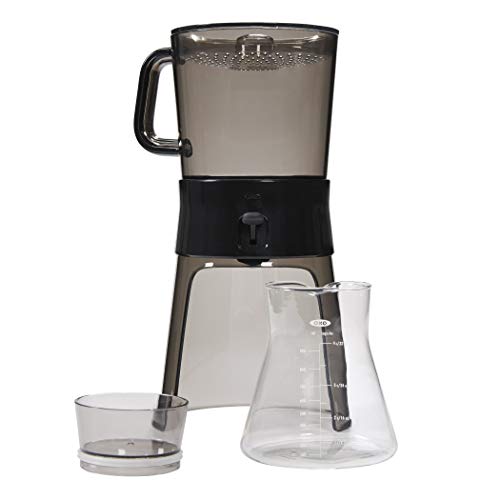
The OXO brews in an upper chamber and drains into a glass carafe with one switch, so there’s no lifting a wet filter. It suits anyone who makes a big batch of concentrate every week. It cost $49.99 when we checked.
Toddy Cold Brew System – The Classic
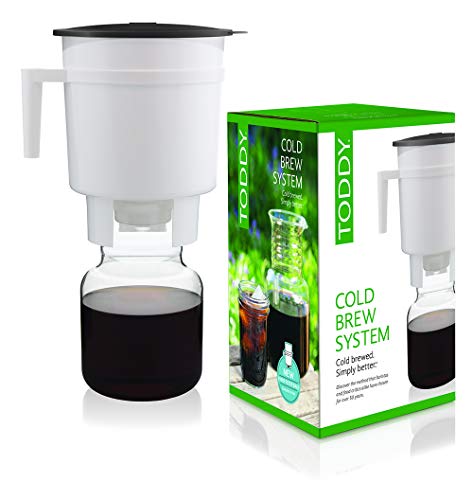
Toddy has been making cold brew systems for decades, and many coffee shops use the same method. It makes a strong concentrate you dilute with water or milk.
Is Low Acid Coffee Worth It?
It depends on why coffee bothers you. If regular coffee gives you mild discomfort, try the free fixes first: a darker roast and cold brew. If that isn’t enough, a low acid brand is a reasonable next step.
The cost difference is real. Premium low acid coffees run about $2.30 to $2.40 per ounce, compared with roughly $0.70 per ounce for Folgers Simply Smooth. A good plan is to buy one 12 oz bag, drink only that for a week or two, and see if you notice a difference before committing.
If coffee causes real heartburn or reflux, low acid coffee may help a little, but it isn’t a fix. Talk to your doctor, especially if symptoms happen often.
How We Chose
We looked at the low acid coffees that come up most across Amazon and the top-ranking guides, then checked each live Amazon listing on October 5, 2026 for roast, format, price and rating. We report pH figures only with their source, and we label brand claims as brand claims. Where two sources disagree, we show both. We didn’t run our own lab tests.
Low Acid Coffee FAQ
Is cold brew less acidic than hot coffee?
Partly. A 2018 study found cold brew and hot brew have a similar pH (around 5), but hot coffee had higher titratable acidity, meaning more total acid. Many people find cold brew easier on the stomach.
Is dark roast coffee less acidic?
Dark roasts tend to taste less acidic, and research has linked a compound found mostly in dark roasts to lower stomach acid production. Measured pH differences between roasts are usually small.
Does decaf coffee have less acid?
Not much. Decaffeination doesn’t remove much acid. But if caffeine is what triggers your symptoms, decaf may still help. See our decaf guide.
What is the best coffee for acid reflux?
There’s no coffee proven to prevent reflux. A dark roast or low acid coffee, brewed as cold brew and not drunk on an empty stomach, is a common starting point. If you have GERD, ask your doctor first.
What is the pH of coffee?
Regular brewed coffee is usually around pH 4.85 to 5.10. Low acid brands claim figures from about 5.3 to 6.2, depending on the brand and who tested it.
Is Arabica less acidic than Robusta?
Arabica often tastes brighter, while Robusta tastes harsher and more bitter. Taste acidity and pH aren’t the same thing. Our Arabica vs Robusta guide explains the differences.
Bottom Line
Most people: Lifeboost Medium Roast.
Most sensitive stomachs: Lifeboost Dark Roast, brewed as cold brew.
Tight budget: Folgers Simply Smooth.
Specialty flavor for less: Volcanica Low Acid Blend.
Keurig owners: Lifeboost Decaf K-Cups.
Cutting caffeine too: Lifeboost Decaf.


