

Green coffee beans just means raw, unroasted coffee, the seed before heat turns it brown and unlocks the aroma you actually associate with coffee. Buying green means you’re doing the roasting yourself, at home, in an oven, a skillet, a popcorn popper, or a dedicated home roaster, and it’s become a genuinely popular hobby for a simple reason: roasted coffee starts losing flavor within weeks, but green beans stay stable for a year or more, so you’re always roasting something closer to fresh than anything you can buy pre-roasted off a shelf.
We picked beans based on what actually matters for a home roaster: how forgiving the bean is across roast levels, how consistent the sourcing is, and whether the listing gives you real information (origin, altitude, process) instead of just “coffee beans, unroasted.” Below is the quick-comparison table, then what to actually look for, then the full picks.
Quick Comparison
| Green Coffee Beans | Best For | Origin | Roast Range | Size |
|---|---|---|---|---|
| Fresh Roasted Coffee Organic Ethiopian Yirgacheffe | Best Overall | Ethiopia (Yirgacheffe) | Light to medium | 5 lb |
| Roastika Colombia Supremo | Best for Beginners | Colombia | Light to dark, very forgiving | 5 lb |
| Brazil Mogiana Green Coffee | Best Budget/Low-Acid | Brazil (Mogiana) | Medium to dark | 2 lb |
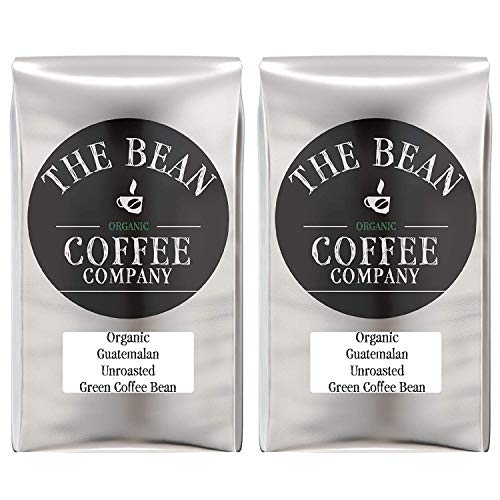
| The Bean Coffee Co. Organic Guatemalan | Best for Dark Roast | Guatemala | Medium to dark | 2 x 16oz |
| Roastika Bundle 1 Sampler Pack | Best Variety Pack | Brazil, Colombia, Costa Rica, Mexico | Varies by origin | 4 x 1lb |
What to Actually Look For
Not every green coffee listing gives you the information that matters. Before buying, check for:
Origin and region, not just a country name. “Ethiopian Yirgacheffe” tells you something real, altitude, processing tradition, typical flavor notes. A plain “Ethiopian coffee” listing with no region is a weaker bet, you’re trusting the seller’s blending decisions instead of buying a known profile.
Processing method, if listed. Washed beans tend to be cleaner and brighter, natural (dry-processed) beans tend to be fruitier and heavier-bodied. Neither is better, but knowing which one you’re buying tells you roughly what to expect before you’ve roasted a single batch.
Crop date or “fresh current crop” language. Green coffee doesn’t go stale the way roasted coffee does, but it does slowly lose vibrancy over a year or two, especially past 18 months. A listing that mentions current crop or harvest year is a small but real signal the seller is paying attention to freshness, not just moving old inventory.
Roast-level forgiveness for your experience level. Some origins (Colombia, Brazil) taste good across a wide range of roast levels, which is genuinely useful while you’re still learning to read your roaster. Others (light, delicate Ethiopians) have a narrower window where they actually shine, and reward more precision.
Fresh Roasted Coffee Organic Ethiopian Yirgacheffe, 5 lb – Best Overall
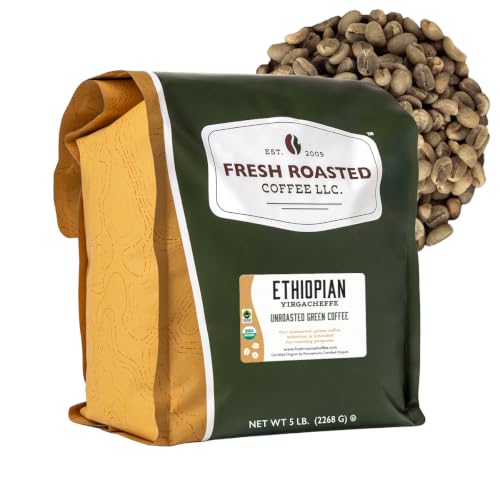
Ethiopian Yirgacheffe is one of the most recognizable origins in specialty coffee for a reason, bright, floral, citrusy, with a genuinely distinctive cup that’s hard to mistake for anything else. This particular lot is USDA Organic, wash-processed, and sourced as a heirloom varietal, which means it hasn’t been bred toward any single trait the way many modern commercial varieties have, giving it a more complex, less predictable flavor that a lot of home roasters specifically seek out.
Fresh Roasted Coffee roasts and packages its own coffee at scale (their roasted lineup is one of the more recognizable names on Amazon), and that same sourcing pipeline feeds their green bean offerings, so you’re not buying from an unknown reseller with no track record.

The honest tradeoff: Yirgacheffe rewards a lighter touch. Push it too far into a dark roast and you burn off the exact floral, citrusy qualities that make it worth buying in the first place. If you’re brand new to home roasting and haven’t yet developed a feel for pulling beans at the right moment, this isn’t the most forgiving first bag, though it’s genuinely worth working toward.
Specs: 5 lb bag, Ethiopian heirloom varietal, wash-processed, USDA Organic, sourced from the Yirgacheffe region, recommended light to medium roast.
Pros: Distinctive, high-quality flavor profile that’s genuinely hard to replicate with other origins, organic certification, sourced by an established coffee company with real roasting infrastructure, large enough bag to practice multiple roasts.
Cons: Narrower roast window than more forgiving origins, best results require a lighter roast and some dialing-in, not the most beginner-forgiving bean on this list.
Not the right fit if: you’re roasting your very first batch ever, in which case the Colombia Supremo below gives you more room for error while you learn your roaster.
Roastika Colombia Supremo, 5 lb – Best for Beginners
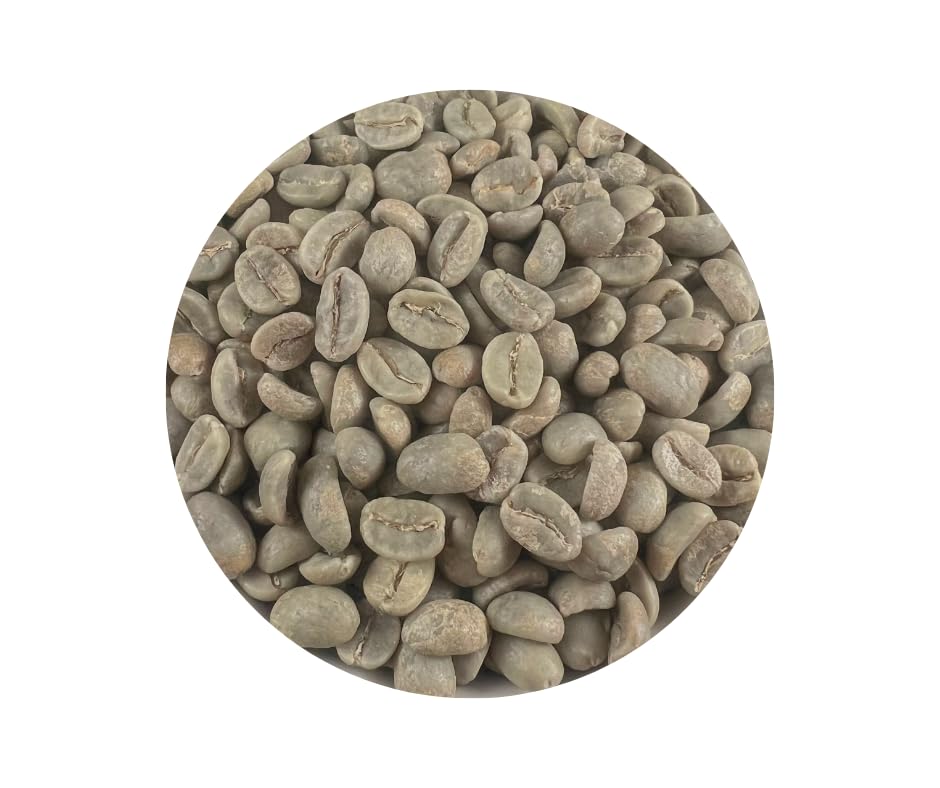
Colombian Supremo is close to the textbook definition of a forgiving bean, medium body, balanced acidity, and a flavor profile that stays pleasant across a genuinely wide roast range, from a lighter city roast through a fuller dark roast without falling apart. That range is exactly what makes it a smart first bag: it gives you room to under-roast or slightly over-roast while you’re still learning to read your equipment’s sound, smell, and color cues.
Roastika sells single-origin green coffee at scale with clearly labeled altitude, process, and grading information on their listings, which is more transparency than a lot of green bean sellers offer, and useful once you’re ready to start comparing origins more seriously.
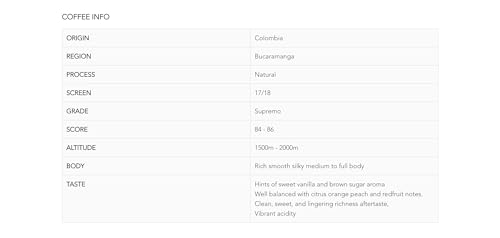
It’s a genuinely good everyday bean, but it’s also, intentionally, not a showcase bean. If you’re specifically chasing the bright, distinctive character of a single-region Ethiopian or a fruity natural-process lot, Colombian Supremo’s whole appeal is that it’s balanced and reliable rather than dramatic.
Specs: 5 lb bag, single-origin Colombian Supremo grade, forgiving across light to dark roasts, sourced and graded by Roastika.
Pros: Wide roast-level forgiveness makes it genuinely hard to ruin, balanced everyday flavor, clearly labeled sourcing information, large bag size for extended practice.
Cons: Less distinctive than a showcase single-origin like Yirgacheffe, not the pick if you want a dramatic, unusual flavor profile.
Not the right fit if: you already have a few successful roasts under your belt and want something with more personality, in which case the Ethiopian Yirgacheffe above is the more rewarding next step.
Brazil Mogiana Green Coffee, 2 lb – Best Budget/Low-Acid

Brazilian beans, and Mogiana-region beans specifically, are known for low acidity, a nutty, chocolatey body, and a genuine tolerance for darker roasting, which is a combination that makes Brazil the default recommendation for anyone whose stomach doesn’t love high-acid coffee or who just prefers a heavier, darker cup. Mogiana sits along the São Paulo-Minas Gerais border, a well-established growing region with a long commercial coffee history, so the sourcing here isn’t experimental.
This is also one of the more affordable entries on this list, Brazilian beans are typically priced lower than Ethiopian or specialty Central American lots, which makes the smaller 2 lb bag size a reasonable way to try the origin without a big commitment.

The tradeoff for that low acidity and heavy body is complexity, Brazilian beans are reliable and pleasant, but they don’t have the layered, bright, single-region character that makes Ethiopian or Kenyan coffees exciting to specialty drinkers. It’s a workhorse bean, not a conversation piece.
Specs: 2 lb bag, single-origin Brazilian Mogiana, natural low acidity, tolerates medium to dark roasting well.
Pros: Genuinely gentle on the stomach compared to higher-acid origins, forgiving at darker roast levels, budget-friendly pricing, established growing region with consistent quality.
Cons: Smaller bag size than most other entries here, flavor profile is pleasant but less complex than specialty single-origins, not the pick if bright acidity is what you enjoy.
Not the right fit if: you specifically want a bright, high-acid, fruit-forward cup, in which case the Ethiopian Yirgacheffe above is the opposite end of that spectrum.
The Bean Coffee Company Organic Guatemalan, 2 x 16oz – Best for Dark Roast
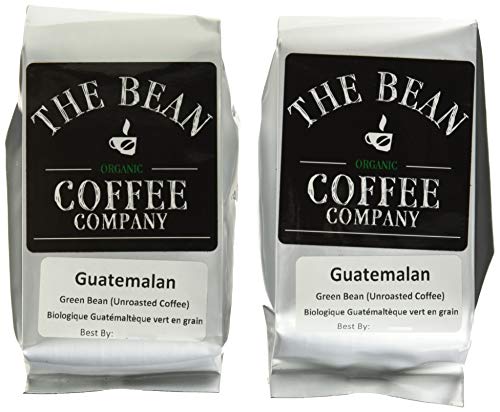
Guatemalan green coffee has a reputation for holding up remarkably well at darker roast levels, staying rich and full-bodied without turning harsh or ashy, which makes it a strong pick specifically for anyone whose preference is French roast or Italian roast rather than a lighter cup. This lot is medium-bodied with floral hints at lighter roasts too, so it’s not a one-trick bean, but darker roasting is where it genuinely shines.
The Bean Coffee Company uses 100 percent organic, USDA and CCOF-certified Arabica beans, and the two-bag 16oz format is a practical middle ground, enough to get a real feel for the origin without committing to a 5lb bag before you know if you like it.
Worth knowing upfront: raw green beans naturally carry higher levels of chlorogenic acid than roasted beans, since roasting is what breaks much of it down. That’s true of every bean on this list, not unique to this one, but it’s part of why every green coffee product, including this one, is explicit that it’s meant to be roasted before use, not consumed or brewed raw.
Specs: 2 x 16oz bags (32oz total), Guatemalan Arabica, USDA Organic and CCOF certified, medium body with floral notes, roasts well from medium through dark.
Pros: Genuinely excellent at darker roast levels without turning harsh, organic certification from two recognized bodies, two-bag format is good for trying before committing to a bulk size.
Cons: Smaller total quantity than the 5lb single-origin options here, priced somewhat higher per pound for the organic certification.
Not the right fit if: you exclusively drink light roasts, in which case the Ethiopian Yirgacheffe above plays much better in that lighter range.
Roastika Bundle 1 Sampler Pack, 4 x 1lb – Best Variety Pack

If you genuinely don’t know which origin you’ll prefer yet, and most people starting out don’t, this sampler solves that problem directly: four 1lb bags covering Brazil Cerrado, Colombia Supremo, Costa Rica Las Trojas, and Mexico Chiapas, each with real listed specs (altitude, processing method, cupping score) rather than vague marketing copy. That’s four genuinely different flavor directions in one order, from Brazil’s low-acid heaviness to Costa Rica’s brighter, fruitier profile.
Roasting the same weight from four different origins side by side, using the same roast profile each time, is honestly one of the fastest ways to learn what you actually like, far faster than buying one 5lb bag of a single origin and guessing.
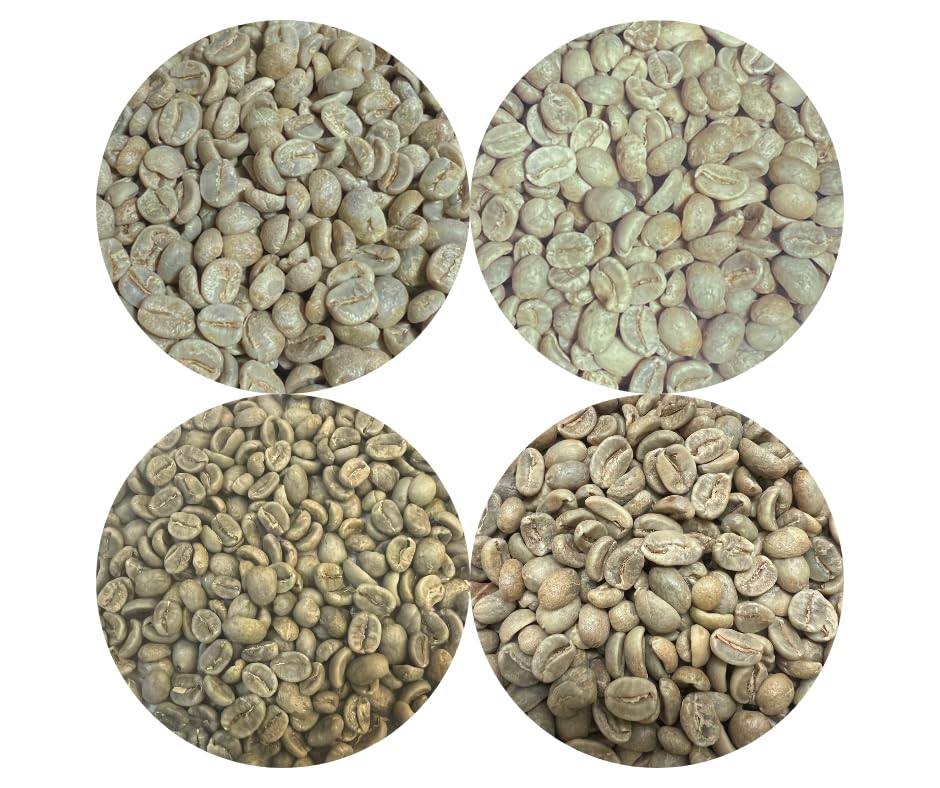
The obvious tradeoff is quantity, four 1lb bags means less total coffee than a single 5lb bag at a similar price point, and once you find your favorite among the four, you’ll be reordering that origin separately in a larger size anyway.
Specs: 4 x 1lb bags (4lb total), Brazil Cerrado / Colombia Supremo / Costa Rica Las Trojas Superior SHB EP / Mexico Chiapas HG EP, altitude and processing details listed per origin.
Pros: Genuinely efficient way to compare origins side by side, detailed per-bag sourcing information, good gift option for someone getting into home roasting, four distinct flavor directions in one order.
Cons: Less total coffee per dollar than a single-origin bulk bag, you’ll likely need to reorder your favorite separately once you find it.
Not the right fit if: you already know you love a specific origin, in which case buying that one directly in a larger bag, like the Colombia Supremo or Brazil options above, is the more economical choice.
A Quick Safety and Storage Note
Green coffee beans are meant to be roasted before use. They’re not brewed raw and they’re not meant to be eaten straight from the bag, every legitimate seller on this list states that clearly on their listing, and it’s worth taking seriously rather than treating as boilerplate. Raw beans also carry naturally higher levels of chlorogenic acid than roasted beans, since roasting is what breaks much of it down.
On the storage side, the news is much better than with roasted coffee: green beans, stored in a cool, dry place away from direct light, stay usably fresh for a year or more, sometimes longer, which is a big part of why home roasting appeals to people who want fresher coffee than any pre-roasted bag can offer. Once roasted, though, the clock resets, roasted coffee is best used within two to four weeks, so it’s worth roasting only what you’ll actually drink in the near term rather than roasting your whole bag at once.
How to Actually Roast Them
This article is about picking beans, not roasting equipment, since your options range from a stovetop skillet to a dedicated home roaster and the right choice depends on your budget and how seriously you want to take the hobby. If you’re new to the process itself, including what’s actually happening chemically as beans go from green to first crack to second crack, our guide to what coffee roasting is covers the fundamentals before you roast your first batch.
Frequently Asked Questions
How long do green coffee beans actually last?
Roughly a year to eighteen months at peak quality when stored in a cool, dry, dark place, though they don’t spoil the way food does, they just gradually lose some vibrancy and flavor complexity. That’s dramatically longer than roasted coffee, which is best within two to four weeks of roasting.
Can I roast green coffee beans in a regular oven?
Yes, though it’s harder to get even results than with a dedicated roaster or even a stovetop skillet, since ovens don’t agitate the beans the way roasting equipment does, and uneven agitation means some beans finish before others. It’s a reasonable way to try roasting for the first time before deciding whether to invest in dedicated equipment.
Is Arabica always better than Robusta for home roasting?
For most home roasting purposes, yes, arabica is the more common and more forgiving choice, with a wider flavor range and generally smoother acidity. Robusta has its place, notably in Vietnamese-style coffee and some espresso blends, but nearly all specialty green coffee sold for home roasting is arabica for a reason.
Why do prices vary so much between different green coffee beans?
Altitude, processing method, and origin reputation all factor in. High-altitude, hand-picked, wash-processed specialty lots from well-known micro-regions cost more than commercial-grade beans from large-scale growing regions, similar to how wine pricing reflects vineyard reputation and production method, not just the grape variety.
Bottom Line
If you want one bag that’s genuinely worth the learning curve, the Ethiopian Yirgacheffe delivers a distinctive cup that’s hard to get anywhere else. If this is your first time roasting anything, start with the Colombia Supremo, it’s genuinely hard to mess up. Prefer a low-acid, dark, heavy cup, go Brazilian. Dedicated dark-roast drinkers should look at the Guatemalan, and anyone who genuinely doesn’t know their preference yet should start with the Roastika sampler pack and let the side-by-side comparison make the decision for you.


