

The Breville Barista Pro is the fastest way to get a built-in grinder and real café-style espresso on one machine without paying Barista Touch money. It heats up in about 3 seconds, has a 30-setting conical burr grinder, and shows a shot timer on a clear LCD screen. The catch is the price: at $830 it costs well over $100 more than the Barista Express, and the espresso in the cup is not dramatically better.
What you pay extra for is speed and control. No warm-up wait, steam ready the moment your shot finishes, finer grind steps, adjustable temperature and a 2-year warranty. Below we cover how the Barista Pro performs, the grinder issue most owners hit in week one, what owners report after months of use, and how it stacks up against the Express, Express Impress and Touch.
Quick verdict
Price: $830.00 on Amazon (checked October 30, 2026).
Buy it if: you make milk drinks most mornings, you hate waiting for a machine to warm up, and you want a grinder, brewer and steam wand in one box.
Skip it if: you want the lowest price for the same espresso (get the Barista Express), you want milk done for you (look at the Barista Touch), or you mostly drink very light roasts.
What Is the Breville Barista Pro?
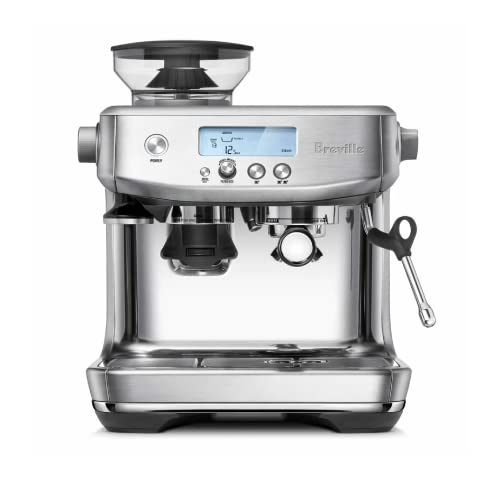
The Barista Pro (model BES878) is a semi-automatic espresso machine with a grinder built in. You grind straight into the portafilter, tamp, lock it in and press a button. The machine controls water temperature and pressure. You steam the milk yourself with a manual wand.
In Breville’s lineup it sits in the middle. The Bambino has no grinder. The Barista Express adds a grinder but uses an older, slower heater. The Barista Pro keeps the grinder and adds the fast ThermoJet heater and a digital screen. The Barista Touch adds a touchscreen and automatic milk on top of that.

Breville Barista Pro specs
| Spec | Breville Barista Pro (BES878) |
|---|---|
| Price | $830.00 on Amazon, $849.95 list at Breville |
| Heating | ThermoJet, about 3 seconds to brewing temperature |
| Temperature control | Digital (PID), adjustable from the menu |
| Pressure | 15-bar Italian pump, low-pressure pre-infusion, then 9-bar extraction |
| Grinder | Integrated conical burr, 30 grind settings, timed dose control |
| Portafilter | 54mm |
| Baskets | Single and double, in single-wall and dual-wall (pressurized) |
| Display | Backlit LCD with shot timer and grind settings |
| Steam wand | Manual |
| Water tank | 1.9 L (67 oz), removable |
| Bean hopper | 250 g (about 1/2 lb) |
| Size | 16.1″ W x 13.8″ D x 13.1″ H |
| In the box | Portafilter, 4 baskets, dosing funnel, Razor dose trimming tool, 480 ml milk jug, cleaning kit, water filter |
| Warranty | 2 years |
Specs come from Breville, ECS Coffee and the Amazon listing (all retrieved 2026-10-30).
ThermoJet: Why the 3-Second Heat-Up Matters

This is the main reason to pick the Pro over the Barista Express.
The Express uses an older Thermocoil heater. It needs time to warm up, and after you pull a shot you wait again for it to switch to steam. The Pro’s ThermoJet heats only the water it needs, almost instantly. You press power, grind, tamp, and it is ready by the time the portafilter is locked in.
The bigger win is milk. On the Pro, steam is ready right after the shot finishes. Complete Home Barista measured about 25 to 35 seconds to steam 8 oz of milk on the Pro, against 35 to 50 seconds on the Express, plus the Express’s wait to switch over. If you make two lattes before work, that gap adds up every single morning.
One small catch: the ThermoJet heats water fast, but it doesn’t heat the metal parts for you. Run a short blank shot of hot water through the empty portafilter first. A cold portafilter cools the first shot and makes it taste sour.
The Built-In Grinder
The grinder is a conical burr with 30 settings, up from 16 on the Barista Express. More settings means smaller steps between them, so it’s easier to land on the right grind. You set the dose by grind time, and the screen shows both the grind setting and the time.
It does the job well for most medium and dark roasts. Reviewers raise three consistent complaints:
- It’s loud. Plan on it being the loudest thing in your kitchen for a few seconds every shot.
- It holds some grounds. A little coffee stays in the chute between shots. Purge a second of grinding if the machine has sat for a day.
- It doses by time, not weight. As the hopper empties, the dose can drift. A cheap scale fixes this.
The included dosing funnel helps a lot. It sits on top of the portafilter and stops grounds spilling over the edge. Use it every time.
When setting 1 isn’t fine enough
This is the problem most new owners hit, and most reviews skip the fix. You set the dial to its finest setting and the shot still runs fast and thin. That usually means one of three things:
- The beans are stale. Old supermarket beans won’t resist the water no matter how fine you go. Try beans with a roast date from the last few weeks first.
- The dose is too low. Fill the double basket properly, then use the Razor tool to level it. An underfilled basket runs fast.
- The upper burr needs moving. The Pro has an internal upper burr with numbered positions under the hopper. Moving it finer shifts the whole 30-step range down. Breville’s manual shows how to do it. Only move it one step at a time, and only after you’ve ruled out beans and dose.
Espresso Quality

With fresh beans and a little dial-in time, the Barista Pro makes rich, balanced espresso that holds up well in milk drinks. Three features do most of the work.
Digital temperature control (PID) keeps the water steady from shot to shot. Steady temperature means steady taste, which matters most while you’re still learning.
Low-pressure pre-infusion wets the coffee gently before full pressure kicks in. That helps water flow evenly instead of punching a channel through the puck. Some reviewers find the factory pre-infusion a bit long and shorten it in the settings. Try that if your shots taste flat.
The shot timer on the LCD makes dialing in simple. Aim for a shot that takes roughly 25 to 30 seconds and adjust from there by taste.
The honest limit: the espresso is not dramatically better than a well-dialed Barista Express. Both use a 54mm portafilter and similar pressure. You’re paying for speed, easier control and less waiting, not a different class of espresso.
Light roasts and brew temperature
Very light roasts are harder to extract and usually taste sour at standard temperatures. Unlike the Bambino, the Pro lets you raise the brew temperature from the menu. Bump it up a step or two for light roasts and grind finer. Even then, the built-in grinder isn’t ideal for very light roasts. If that’s most of what you drink, a separate espresso grinder will serve you better. For easier beans, see our guide to the best coffee beans for espresso.
Steaming Milk
The manual steam wand is strong enough for proper microfoam: the smooth, glossy milk you need for lattes, flat whites and latte art. And because of the ThermoJet, it’s ready the moment your shot finishes.
Manual means you control it. Hold the tip just under the surface to add air for a few seconds, then sink it a little deeper to spin the milk until the jug feels hot to the touch. Expect a week or two of practice before it feels natural. Amazon reviewers often say it’s beginner-friendly for frothing once you get the hang of it.
If you never want to learn, the Barista Touch adds an automatic wand that sets temperature and texture for you. It costs about $170 more at current Amazon prices.
Living With the Barista Pro Every Day
A normal morning looks like this: turn it on, grind into the portafilter with the funnel on, level with the Razor, tamp, brew, steam. Start to finish, a latte takes a few minutes, and Amazon reviewers mention brewing in under 3 minutes.
Cleanup is simple but steady. Purge and wipe the steam wand after every use. Knock out the puck, rinse the basket, and empty the drip tray when the red “Empty Me” indicator pops up. The machine reminds you when it’s time to clean and descale.
Counter space is the other thing to plan for. At about 16 inches wide and 13 inches tall, it needs a real spot on the counter, and the bean hopper needs clearance under wall cabinets.
Barista Pro vs Barista Express vs Express Impress vs Touch
This is the decision most buyers are really making. All four have a built-in grinder and a 54mm portafilter. Prices are Amazon prices checked October 30, 2026.
| Machine | Price | Heating | Grind settings | Milk | Best for |
|---|---|---|---|---|---|
| Barista Express | $683.49 | Thermocoil, slower warm-up | 16 | Manual wand | Lowest price, analog pressure gauge |
| Barista Express Impress | $799.95 | Thermocoil, slower warm-up | 25 | Manual wand | Beginners who want help with dose and tamping |
| Barista Pro | $830.00 | ThermoJet, about 3 seconds | 30 | Manual wand | Daily milk drinks, no waiting |
| Barista Touch | $999.95 | ThermoJet, about 3 seconds | 30 | Automatic wand | Hands-off milk, touchscreen recipes |
Pick the Barista Express if price matters most and you don’t mind a short wait. Once dialed in, its espresso is close to the Pro’s. Our full Barista Express review covers it in detail.
Pick the Express Impress if dosing and tamping are what worry you. Its assisted tamping lever and smart dosing take the guesswork out of puck prep, but it keeps the slower Thermocoil heater.
Pick the Barista Pro if you make milk drinks every day and want the fastest workflow with full manual control. At current prices it’s only about $30 more than the Impress.
Pick the Barista Touch if you want the milk done for you and like saved drink recipes on a touchscreen.
Starter Dial-In Recipe
Use this as a starting point for a medium roast in the double basket, then adjust by taste.
- Grind: start in the middle of the range, around 15, then go finer one step at a time.
- Dose: fill the double basket with the funnel on, tamp, then level with the Razor tool. A scale helps: about 18 g of ground coffee is a common starting dose.
- Brew: pull a double and watch the timer. Aim for about 25 to 30 seconds and roughly twice the coffee’s weight in liquid espresso.
- Taste: sour or thin means grind finer. Bitter or harsh means grind coarser. Change one thing at a time.
If a shot gushes out in under 15 seconds even at the finest settings, go back to the “When setting 1 isn’t fine enough” section above.
Cost to Own
The sticker price isn’t the whole cost. Plan for these too:
- Water filters. The filter in the tank should be swapped every few months. It protects the ThermoJet from scale.
- Descaling. The machine tells you when it’s due. Our guide on how to descale a coffee maker covers Breville espresso machines step by step.
- Cleaning tablets and grinder care. Run a cleaning cycle when prompted, and brush out the burrs now and then so old oils don’t build up.
- Fresh beans. The biggest ongoing cost, and the one that changes taste the most.
The 2-year warranty helps here too. Any early defect is covered for twice as long as on the Barista Express.
Best Upgrades for the Barista Pro
The Pro uses a 54mm portafilter, so it shares accessories with the Bambino and Barista Express.
- A spring-loaded 54mm tamper gives you the same tamp pressure every time.
- A 54mm bottomless portafilter shows you exactly how your shot is flowing, which makes dialing in much faster.
- A small coffee scale fixes the time-based dosing drift.
For WDT tools, puck screens and more, see our best espresso accessories guide, sorted by basket size.
Breville Barista Pro Alternatives
Breville Bambino plus a separate grinder. Same fast ThermoJet heater, and a dedicated grinder can grind finer than the built-in one. Better for light-roast fans, and the pair can cost less than the Pro. See our Bambino review.
Breville Barista Express. The cheaper all-in-one. Slower, but very close in the cup.
Ninja Luxe Café Premier. A more guided machine that also brews drip coffee and cold brew. Easier for beginners, less hands-on control. Read our Ninja Luxe Café Premier review.
Comparing more machines? Our best espresso machines under $500 guide covers cheaper options.
Frequently Asked Questions
Is the Breville Barista Pro better than the Barista Express?
It’s faster and easier to control, not dramatically better in the cup. The Pro heats up in about 3 seconds, has steam ready right after the shot, offers 30 grind settings instead of 16, and has a 2-year warranty. The Express costs less and makes very similar espresso once dialed in.
Is the Barista Pro good for beginners?
Yes, if you’re willing to learn. The shot timer, dosing funnel and pressurized baskets make the first weeks easier. You still grind, tamp and steam milk yourself, so expect a short learning curve.
What grind setting should I start with on the Barista Pro?
Start around the middle, at about 15, and go finer one step at a time until a double shot takes roughly 25 to 30 seconds. Fresh beans matter more than the exact number.
Can you use pre-ground coffee in the Barista Pro?
Yes. Use the dual-wall (pressurized) baskets that come in the box. They’re designed for pre-ground coffee and are more forgiving. For the best taste, switch to fresh beans and the single-wall baskets.
Does the Barista Pro have PID?
Yes. It uses digital (PID) temperature control, and unlike the Bambino you can adjust the brew temperature from the menu.
What size is the Barista Pro portafilter?
54mm, the same as the Bambino, Barista Express, Express Impress and Barista Touch.
Can the Barista Pro make regular coffee?
It makes espresso, not drip coffee. For a longer, regular-style cup, make an Americano: pull a double shot, then add hot water from the dedicated hot water outlet.
How long does a Breville Barista Pro last?
Many owners report years of daily use, but some Amazon reviewers report grinder or machine failures in the first few months. Regular descaling and cleaning help. Register it with Breville to make use of the 2-year warranty.
Bottom Line
The Breville Barista Pro is the best pick in Breville’s built-in-grinder lineup for people who make milk drinks every day and hate waiting. The 3-second heat-up, instant steam and finer grind steps make every morning faster. Just know you’re paying for speed and convenience, not a different class of espresso.
Best value: the Barista Express if you don’t mind waiting a bit.
Easiest puck prep: the Barista Express Impress.
Hands-off milk: the Barista Touch.
First upgrades: a spring-loaded tamper and a bottomless portafilter.
Check Barista Pro Price on Amazon


