

Great coffee gear will only take you so far. Knowing why a longer bloom produces a cleaner cup, or why your dark roast tastes bitter at 205°F but balanced at 195°F, or how a coffee grown in Yirgacheffe ended up tasting like blueberries — that understanding lives in books, not spec sheets. The home baristas who brew the most consistently excellent coffee tend to read as much as they dial in. The two habits feed each other.
We put together this list with a simple goal: seven books that will make you a noticeably better home brewer, ranked by how directly useful they are at the brew bar. We skipped the academic and the obscure and focused on the titles that actually change how you think about the cup in your hand. And because RoastRig is first and foremost a gear site, we added one extra element to each review — a Brew While You Read pairing, a specific brewing method or piece of gear to try while working through each book, so what you read translates immediately into what you taste.
Quick Comparison: 7 Best Coffee Books for Home Baristas
| # | Book | Author | Best For | Reader Type | Amazon |
|---|---|---|---|---|---|
| 1 | The World Atlas of Coffee | James Hoffmann | Deep coffee knowledge | Serious enthusiasts | View on Amazon |
| 2 | How to Make the Best Coffee at Home | James Hoffmann | Brewing fundamentals | Beginner–intermediate | View on Amazon |
| 3 | Craft Coffee: A Manual | Jessica Easto | Brew method recipes | Beginners | View on Amazon |
| 4 | Coffee Dictionary: An A-Z of Coffee | Maxwell Colonna-Dashwood | Reference & gifting | All levels | View on Amazon |
| 5 | The New Rules of Coffee | Michelman & Carlsen | Third-wave principles | Curious home brewers | View on Amazon |
| 6 | The Monk of Mokha | Dave Eggers | Coffee origin story | Narrative readers | View on Amazon |
| 7 | Coffee: A Dark History | Antony Wild | Global coffee history | History buffs | View on Amazon |
Full Reviews: The 7 Best Coffee Books for Home Baristas
1. The World Atlas of Coffee — James Hoffmann
Best for: serious coffee enthusiasts who want to understand coffee from seed to cup
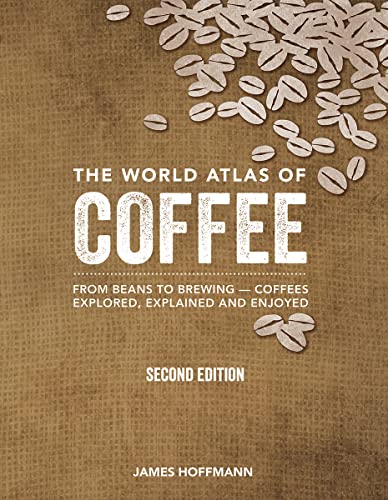
If you were only allowed one coffee book for the rest of your life, this would be the one. James Hoffmann — World Barista Champion, co-founder of Square Mile Coffee Roasters, and the closest thing the specialty coffee world has to a household name — wrote this as a comprehensive atlas of modern coffee, and it delivers on that promise completely. The second edition covers coffee production in over 35 countries, with dedicated chapters on plant biology, processing methods, roasting, and every major brewing style.
What sets the World Atlas apart from other coffee books is the depth of the origin content. Most brewing guides give you a paragraph on Ethiopia or Colombia. Hoffmann gives you maps, growing region breakdowns, flavor profiles by altitude and process, key cooperatives and farms, and the cultural and economic context that shapes what ends up in your bag. Reading the chapter on a country while brewing a single-origin from that region — a Colombian natural one week, a Kenyan washed the next — transforms what could be a dry geography exercise into a sensory experience that makes the cup taste more meaningful.
The brewing chapters are thorough without being prescriptive. Hoffmann explains the variables at play in each method rather than handing you a rigid recipe, which means the knowledge transfers across equipment and bean types. If you have ever wondered why water temperature affects acidity, why bloom time matters, or why some coffees taste better at lower extraction, this book answers all of it clearly and without the snobbery that sometimes creeps into specialty coffee writing.
It is also genuinely beautiful — the photography, maps, and layout are designed to be browsed as much as read linearly. Keep it on the coffee bar and reach for it whenever you open a new bag.
- Covers: Origins (35+ countries), plant varieties, processing, roasting, grinding, all major brew methods
- Format: Hardcover, 256 pages, large format with maps and photography
- Best read: Alongside a rotating selection of single-origin coffees from different countries
- Caveat: The brewing chapters, while solid, are less detailed than Hoffmann’s later dedicated brewing book
☕ Brew While You Read: Work through the origins chapters while brewing single-origin pour-overs on a Hario V60 or Chemex. Pull up the atlas entry for whichever country your current beans come from and cross-reference the region, altitude, and process against what you taste in the cup. A good gooseneck kettle and a quality burr grinder will help you taste the differences Hoffmann describes clearly enough to actually learn from them.
→ View The World Atlas of Coffee on Amazon
2. How to Make the Best Coffee at Home — James Hoffmann
Best for: home brewers who want a practical, no-nonsense guide to brewing better coffee right now

Where the World Atlas goes broad, this book goes deep on the thing most home brewers actually need help with: the brew itself. Published in 2022, this is Hoffmann’s distillation of everything he has learned about making excellent coffee at home — written for people who are serious about the cup but not necessarily interested in becoming professional baristas. It covers filter and espresso, but the filter sections are where it really shines, and those are most relevant for the home barista who wants to get more from a V60, AeroPress, or Moka pot.
The chapters on water are some of the most useful writing on the subject available to a general audience. Hoffmann explains which minerals affect extraction and why, and gives practical guidance on water treatment that most coffee books ignore entirely or drown in chemistry. The grind chapters are similarly grounded — he explains the relationship between grind size and extraction yield in terms that make sense without requiring a degree in food science.
What makes this book stand out from most brewing guides is Hoffmann’s ability to give you the underlying principle rather than just the recipe. Once you understand why a finer grind at lower temperature works for a light roast AeroPress, you can adapt to any beans and any method without consulting a chart. That kind of transferable understanding is rare in coffee writing and makes this the highest practical-value book on this list for someone actively brewing every day.
The production quality is also worth mentioning. The hardcover design, illustrated with clean diagrams and a restrained color palette, makes it a pleasure to keep at the brew bar rather than buried on a shelf. It is compact enough to handle while a kettle heats and detailed enough to reward re-reading as your skills develop.
- Covers: Water chemistry, grinding, filter methods, espresso, milk, troubleshooting extraction
- Format: Hardcover, 224 pages, compact and well-illustrated
- Best read: Chapter by chapter, applied immediately to your current brew setup
- Caveat: Espresso chapters assume access to a home espresso machine — filter brewers get more from the first two-thirds of the book
☕ Brew While You Read: Read the water and grind chapters, then immediately adjust your current setup based on what you learn. If you are brewing filter coffee, Hoffmann’s guidance on temperature and grind size is easiest to apply precisely when you have an electric variable-temperature gooseneck kettle — the ability to dial to within one degree of his recommended starting point makes the experiment meaningful rather than approximate.
→ View How to Make the Best Coffee at Home on Amazon
3. Craft Coffee: A Manual — Jessica Easto
Best for: beginners building their first home coffee setup who want recipes, theory, and method guidance in one place

If Hoffmann’s books are the advanced curriculum, Jessica Easto’s Craft Coffee: A Manual is the ideal starting point. Written for people who know they want to brew better at home but are not sure where to begin, it covers the full landscape of specialty coffee from bean sourcing to cup in a way that is genuinely accessible without being condescending. Easto was a craft beer writer before turning her attention to coffee, and that outsider-turned-enthusiast perspective keeps the writing grounded in how real home brewers actually learn.
The structure is logical: early chapters cover coffee fundamentals — varieties, processing, roasting levels, how to read a bag — before moving into gear, water, and grind. The second half of the book is where it earns its place on this list: ten different brew method chapters, each with a full recipe, troubleshooting guide, and an explanation of why each variable in the recipe matters. The methods covered include V60, Chemex, AeroPress, French press, cold brew, Moka pot, siphon, Kalita Wave, and more. If you have just bought a new brewer and want a reliable starting recipe plus the theory behind it, these chapters are invaluable.
The one fair criticism is that some chapters feel repetitive across methods — certain explanations of extraction and grind size appear in slightly different form in multiple chapters, which makes reading cover to cover feel a little circular. For most readers, that is not a problem: the brew method chapters work best as individual reference sections consulted alongside a specific brewer rather than read in sequence. Think of the book as a field guide you reach for when you pick up a new piece of kit.
- Covers: Origins, roasting, water, grind, 10 detailed brew method recipes with troubleshooting
- Format: Paperback, 256 pages, approachable and well-organized
- Best read: Front to back for beginners; brew method chapters as stand-alone references for experienced brewers
- Caveat: Some repetition across chapters; less deep on extraction science than Hoffmann’s brewing book
☕ Brew While You Read: Use this book as a curriculum. Pick one new brew method per week — AeroPress this week, French press next, Chemex the week after — and work through Easto’s recipe and notes for each one before you brew. By the time you finish the book, you will have hands-on experience with ten different methods and a clear sense of which two or three suit your taste and routine. A cold brew setup is a particularly good one to tackle with Easto’s guidance — her cold brew chapter is among the clearest beginner instructions available.
→ View Craft Coffee: A Manual on Amazon
4. Coffee Dictionary: An A-Z of Coffee — Maxwell Colonna-Dashwood
Best for: any level of coffee lover who wants a beautiful, browsable reference — and the best-looking coffee book gift on this list
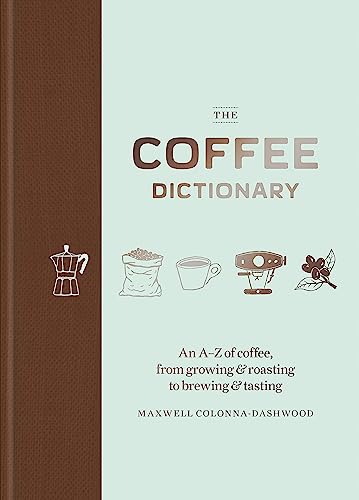
Maxwell Colonna-Dashwood is a three-time UK Barista Champion and one of the most respected thinkers in the specialty coffee world, and the Coffee Dictionary reflects his encyclopedic knowledge in the most accessible format possible: an illustrated A-to-Z reference covering over 200 terms, concepts, people, countries, and techniques from the world of coffee. Tom Jay’s illustrations throughout — clean, graphic, and occasionally striking enough to frame — make the book genuinely lovely as a physical object.
The entries range from one paragraph to a few hundred words, which keeps the reading experience brisk and prevents the reference format from becoming overwhelming. You might look up “anaerobic fermentation” to understand a processing method mentioned on a bag, follow a cross-reference to “natural process” and then “terroir,” and spend a genuinely enjoyable fifteen minutes learning without feeling like you are studying. The personal anecdotes Colonna-Dashwood weaves into certain entries add warmth that a purely clinical reference would lack.
This is not the book to read if you want to learn to brew better — the other entries on this list serve that purpose better. But it is the book that makes every other coffee book more useful. When Hoffmann mentions a specific variety in the World Atlas, or Easto references a processing method in Craft Coffee, the Dictionary is where you turn for the fuller picture. Keep it next to your coffee bar and treat it as a living companion reference rather than a book to read once and shelve.
As a gift, it is hard to beat. The production quality is high, it works for any level of coffee interest from casual drinker to serious enthusiast, and the illustrated format gives it immediate visual appeal regardless of how much the recipient knows about coffee.
- Covers: 200+ terms across varieties, origins, processing, roasting, brewing, tasting, equipment, culture
- Format: Hardcover, 272 pages, beautifully illustrated throughout
- Best read: Dip in and out — look up terms as you encounter them while brewing or reading other coffee books
- Caveat: Not a brewing guide; best used alongside other books rather than as a standalone learning resource
☕ Brew While You Read: Keep this next to your coffee bar as a permanent reference. The next time you open a bag and see unfamiliar processing terminology — “washed,” “honey,” “anaerobic,” “extended fermentation” — look it up while the kettle heats. Cross-reference the term with the Hoffmann World Atlas for the geographic context. Over time, this becomes one of the most practically useful books in your coffee library precisely because you use it in small doses, every day.
→ View Coffee Dictionary: An A-Z on Amazon
5. The New Rules of Coffee — Jordan Michelman & Zachary Carlsen
Best for: curious home brewers who want a fast, fun read that reframes how they think about specialty coffee culture
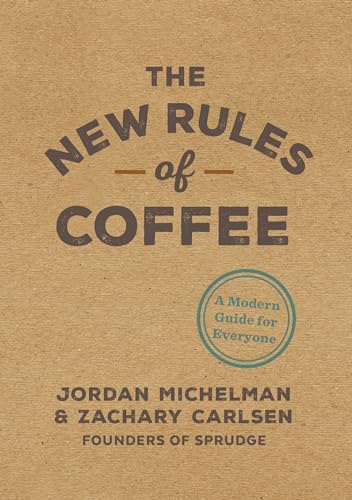
Jordan Michelman and Zachary Carlsen are the founders of Sprudge, the most widely read specialty coffee publication in the world, and The New Rules of Coffee reads like a distillation of everything they have learned writing about coffee professionally for over a decade. At 144 pages with generous illustrations throughout, it is the most compact book on this list — you can read it in a single long Saturday morning session over a pot of something excellent — but it packs a surprisingly meaningful punch for its size.
The “rules” are not brewing recipes or technical guidelines. They are more like principles for thinking about coffee as a whole: how to choose beans, how to understand what a café is trying to do, how to think about fair pricing and farmer compensation, how to talk about coffee without being insufferable about it, and how to develop your palate deliberately rather than passively. The tone is informed but never preachy, and the authors’ evident love for the broader coffee community — farmers, roasters, baristas, home brewers alike — comes through on every page.
The practical brewing content is lighter than in the Hoffmann or Easto books, but that is by design. This book is about developing a framework for thinking about coffee rather than teaching you a specific technique. After reading it, you will approach buying beans, visiting a café, and setting up your home brew bar with a different set of questions and a clearer sense of what you are looking for.
- Covers: Bean sourcing, café culture, fair trade principles, developing a coffee palate, brewing philosophy
- Format: Hardcover, 144 pages, generously illustrated
- Best read: In one sitting — a perfect companion for a lazy weekend morning brew session
- Caveat: Limited technical brewing content; this is a philosophy book more than a how-to guide
☕ Brew While You Read: This book is short enough to read over a single long brew session. Make it a ritual: set up a Chemex — the slowest, most contemplative of the common home brew methods — grind a bag of beans from a roaster you have not tried before, and read The New Rules of Coffee while it brews and steeps. The Sprudge founders’ perspective on sourcing and what makes a quality roaster will shift how you feel about the beans you choose next time.
→ View The New Rules of Coffee on Amazon
6. The Monk of Mokha — Dave Eggers
Best for: readers who want to understand where coffee actually comes from — told as a gripping, true story

Every home brewer eventually starts caring about where their coffee comes from. The Monk of Mokha is the book that answers that question in the most compelling way possible: as a true story that reads like a thriller. Dave Eggers — the acclaimed author of A Heartbreaking Work of Staggering Genius — tells the real-life story of Mokhtar Alkhanshali, a young Yemeni-American who sets out to revive Yemeni specialty coffee and bring it to the United States market, doing so against the backdrop of a civil war that nearly costs him his life.
Before reading this book, most coffee drinkers know Yemen exists somewhere in coffee history — it is where the coffee plant was first cultivated for commercial use, and where the Dutch famously smuggled plants in the 17th century that eventually seeded coffee production across the rest of the world. Eggers brings that history alive by grounding it in a modern story of someone trying to reclaim it, and the result is a book about coffee that is also about immigration, identity, economic justice, and extraordinary personal courage.
The coffee content in the traditional how-to sense is minimal — you will not come away with better brewing technique. But you will come away with a far richer understanding of the human chain behind every bag of coffee you buy, and a genuine interest in seeking out ethically sourced beans with real origin traceability. That shift in how you think about purchasing is one of the most meaningful changes a home brewer can make, and this book drives it more powerfully than any explainer article could.
- Covers: Yemeni coffee history, the modern specialty coffee supply chain, fair trade, origin traceability — all through narrative nonfiction
- Format: Hardcover, 272 pages, reads like a novel
- Best read: Evenings — this is a page-turner that rewards uninterrupted reading time
- Caveat: Not a brewing guide at all — purely narrative; the coffee content is contextual rather than instructional
☕ Brew While You Read: Track down a bag of Yemeni coffee — Port of Mokha (the company Alkhanshali founded) sells directly online, and several specialty roasters carry Yemeni lots. Brew it simply — a clean pour-over or a traditional ibrik if you own one — and taste it while you read. Yemen’s coffees tend to be wild, funky, and deeply complex in a way that is unlike almost anywhere else in the coffee world. Tasting the subject of the story while you read it is one of the most rewarding sensory pairings on this list.
→ View The Monk of Mokha on Amazon
7. Coffee: A Dark History — Antony Wild
Best for: history buffs and socially conscious coffee drinkers who want the full, complicated story of how coffee became the world’s most traded commodity

Antony Wild spent years working in the global coffee trade before writing this book, and that insider vantage point gives Coffee: A Dark History a depth and frankness that more celebratory coffee histories tend to avoid. This is not a book about beautiful farms and passionate roasters. It is a history of how coffee conquered the world — through colonial exploitation, the slave trade, economic manipulation, and the systematic impoverishment of the very countries that produce it — told by someone who watched parts of that system operate in real time.
The early chapters cover the Ethiopian and Yemeni origins of coffee with genuine scholarship, and the narrative of coffee’s spread through the Ottoman Empire, Europe, and eventually the Americas is fascinating reading even before the darker threads emerge. Wild’s thesis — that the free market mechanisms governing global coffee pricing have systematically benefited wealthy importing nations at the expense of producing countries — is argued with evidence rather than sentiment, and the final chapters on the role of organizations like the IMF and World Bank in shaping coffee economics are provocative and worth sitting with.
It is a long and occasionally meandering read — 352 pages, and Wild occasionally disappears into historical tangents that test even a patient reader. But the book is rewarding precisely because it forces you to hold two things in mind at once: the genuine pleasure of a well-brewed cup of coffee, and the complex, often troubled human story behind how that cup arrived in your kitchen. For a home brewer who has read the craft books and wants to understand the bigger picture, it belongs on the shelf.
- Covers: Ethiopian and Yemeni origins, spread through the Ottoman Empire and Europe, colonialism, the slave trade, modern coffee economics and trade policy
- Format: Paperback, 352 pages, dense but rewarding
- Best read: In longer sessions — this is not a book to dip in and out of; the argument builds over time
- Caveat: Meanders at times; no practical brewing content; the tone is scholarly rather than conversational
☕ Brew While You Read: Slow reading deserves slow coffee. Set up a French press — full 8-minute steep, maximum extraction — and settle in for a long chapter. Wild’s history of coffee as an economic and colonial force pairs well with spending time on the question of where your beans come from and whether the farmer who grew them was fairly compensated. After this book, you will read the “relationship coffee” and “direct trade” language on specialty bags very differently.
→ View Coffee: A Dark History on Amazon
How to Choose: Which Coffee Book Should You Start With?

The right starting point depends on what kind of coffee reader you are and what you most want to change about how you brew or how you think about coffee.
If you want to brew better coffee right now, start with How to Make the Best Coffee at Home by Hoffmann. It is the most directly applicable book on this list for someone actively brewing filter coffee at home. The chapters on water and grind size alone are worth the cover price, and the compact format means you can work through a chapter between brew sessions rather than needing long reading blocks.
If you are completely new to specialty coffee, start with Craft Coffee: A Manual by Easto. It covers more ground more gently than Hoffmann’s brewing book and includes detailed recipes for ten different methods, which is exactly what a beginner building a home setup needs. Once you have worked through Easto’s recipes with your equipment, Hoffmann’s book makes a natural second step.
If you want the definitive reference book on coffee origins and varieties, the World Atlas of Coffee is the only answer. It is not a quick read — it is a reference to live with, reached for every time you open a new bag of beans.
If you want a beautiful gift for a coffee lover at any level of experience, the Coffee Dictionary is the safest choice on this list — it looks genuinely impressive on a coffee bar, works for a complete beginner and a seasoned home barista alike, and the illustrations make it enjoyable even for someone who treats it as a casual browsing book.
For readers who want the human story behind coffee, The Monk of Mokha is the most immediately gripping choice. For the full historical and economic context, Coffee: A Dark History is the most challenging and ultimately most thought-provoking.
Frequently Asked Questions
What is the best coffee book for beginners?
Craft Coffee: A Manual by Jessica Easto is the most beginner-friendly book on this list. It covers origins, gear, water, grind, and provides detailed recipes for ten different brew methods, making it a complete starting guide for anyone new to home specialty coffee. James Hoffmann’s How to Make the Best Coffee at Home is an excellent follow-up once you have the basics in place.
What coffee books does James Hoffmann recommend?
Hoffmann has referenced Scott Rao’s works on espresso and roasting in his videos, along with academic papers on extraction science. For the home brewer, however, his own two books — the World Atlas of Coffee and How to Make the Best Coffee at Home — remain the most accessible and practical starting points he has produced, and both are available on Amazon.
Is The World Atlas of Coffee worth buying?
Yes, for anyone serious about understanding where coffee comes from and what makes different origins taste different. It is less a brewing manual and more a reference atlas — the kind of book you reach for every time you open a new bag rather than reading once and shelving. The second edition covers 35+ countries with maps, flavor profiles, and processing details that genuinely change how you taste single-origin coffees.
What is a good coffee book to give as a gift?
The Coffee Dictionary: An A-Z of Coffee by Maxwell Colonna-Dashwood is the strongest gift option on this list — it is visually beautiful, works for any level of coffee interest, and the illustrated format gives it immediate appeal. The World Atlas of Coffee is also a popular gift for serious coffee enthusiasts. Both are available on Amazon and make an excellent pairing if you want to give two books together.
What should I read to learn about the history of coffee?
For a gripping narrative approach to coffee history, The Monk of Mokha by Dave Eggers is the most readable — it tells the true story of Yemen’s coffee revival through one extraordinary person’s journey. For a broader, more scholarly history of coffee’s global impact on economics, colonialism, and politics, Coffee: A Dark History by Antony Wild is the most thorough treatment available for a general audience.
All 7 Books at a Glance
| Book | Author | Best For | Amazon Link |
|---|---|---|---|
| The World Atlas of Coffee | James Hoffmann | Origins, varieties, serious enthusiasts | View on Amazon → |
| How to Make the Best Coffee at Home | James Hoffmann | Practical brewing fundamentals | View on Amazon → |
| Craft Coffee: A Manual | Jessica Easto | Beginners, 10 brew method recipes | View on Amazon → |
| Coffee Dictionary: An A-Z of Coffee | Maxwell Colonna-Dashwood | Reference, gift, all levels | View on Amazon → |
| The New Rules of Coffee | Michelman & Carlsen | Third-wave culture, quick read | View on Amazon → |
| The Monk of Mokha | Dave Eggers | Origin storytelling, narrative readers | View on Amazon → |
| Coffee: A Dark History | Antony Wild | Full coffee history, economics | View on Amazon → |
Final Verdict
If you read just two books from this list, make them How to Make the Best Coffee at Home by Hoffmann for the practical brewing knowledge you can apply tomorrow morning, and the World Atlas of Coffee for the deeper understanding of what is in your cup and why it tastes the way it does. Those two books together cover more useful ground for a home barista than anything else available at any price point.
Add Craft Coffee: A Manual if you are just starting out and want structured recipes before you dive into Hoffmann’s more principle-based approach. Add the Coffee Dictionary if you want a companion reference that makes all the others more useful — or if you need a gift that will genuinely impress a coffee-obsessed friend.
The books do not replace the gear, and the gear does not replace the books. Both get better when you have the other. Stay curious, and keep the kettle hot.



2 thoughts on “7 Best Coffee Books Every Home Barista Should Read”