
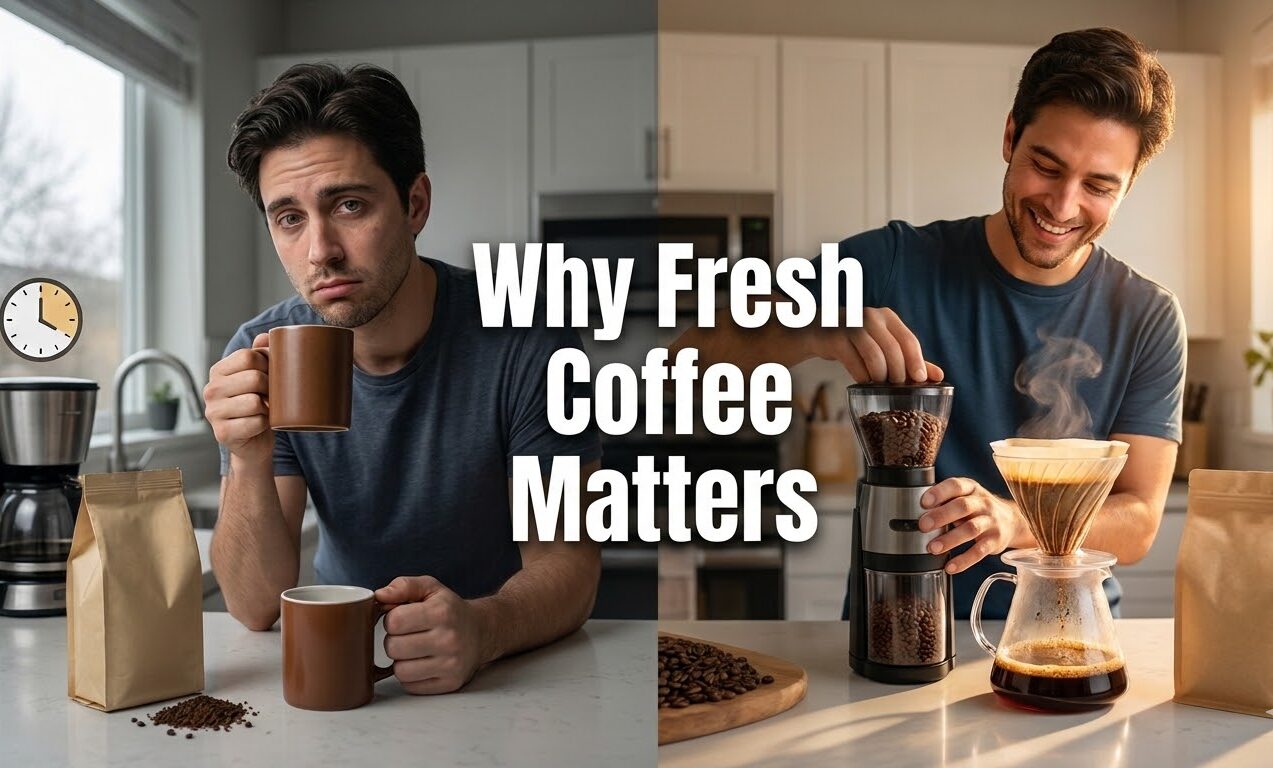
You buy a bag of decent beans and use a respectable brewer. Your first few cups are vibrant and full of flavor. But two weeks later, you brew a cup that just tastes flat and lifeless.
Equipment alone rarely fixes the problem — as our coffee myths debunked guide explains. Staleness is often the hidden culprit, even when your brew method and ratios are exactly the same. Understanding why fresh coffee matters is the first step to consistently great mornings. For many home brewers, freshness is one of the biggest factors separating a vibrant cup from a dull one.
Quick Verdict
- Best for flavor: Freshly roasted whole beans
- Best for convenience: Pre-ground coffee, but it comes with a real flavor tradeoff
- Best for espresso: Whole beans rested for several days with a visible roast date
- Best first upgrade: A quality burr grinder
- Best storage method: An airtight, opaque container kept away from heat and light
What “Fresh Coffee” Actually Means
Freshness is not about when you bought the bag at the store. It is entirely about how much time has passed since the coffee was roasted, and how well it was protected afterward.
If a bag gives you an expiry date but no roast date, it may be fine for shelf life — but it tells you almost nothing useful about flavor.
That said, coffee can actually be too fresh. Right after roasting, beans release a significant amount of carbon dioxide. This aggressive degassing can cause uneven extraction and inconsistent flavor. For most home brewing, using beans roasted within the last 2 to 3 weeks is a practical target window — though roast level, packaging, and brew method all influence the exact sweet spot.
Why Fresh Coffee Tastes Better
The difference in taste comes down to basic chemistry. Four things happen as coffee ages:
- CO2 degassing: Freshly roasted beans trap carbon dioxide inside. When hot water hits fresh coffee, this gas escapes and creates a thick pour-over bloom or rich espresso crema. Stale beans have lost this gas entirely, leaving extractions flat and uneven.
- Aromatic compounds: Coffee contains hundreds of volatile compounds that give it complex, fruity, or chocolatey character. These fade rapidly over time, leaving old coffee smelling far less expressive.
- Oxidation: Oxygen degrades the delicate oils and flavor compounds in the beans, turning a layered, sweet cup into something flat, bitter, and sometimes woody.
- Heat, light, and moisture: All three accelerate the processes above — which is why storage conditions matter as much as roast date.
Fresh coffee tastes brighter, sweeter, and more aromatic. Old coffee tastes flat, dull, and stripped of character.
Fresh vs Stale: What You’ll Notice in the Cup
Stale coffee does not always taste obviously spoiled. More often, it just tastes lifeless — like the personality has been stripped from the cup. If you constantly blame your brewer or grinder, freshness is probably the real issue. Our coffee myths debunked guide covers several of these misdirections in detail.
| Quality | Fresh Coffee | Stale Coffee |
|---|---|---|
| Aroma | Vibrant, expressive | Faint, dusty |
| Flavor | Clear, layered | Flat, dull |
| Acidity | Bright, balanced | Muted or harsh |
| Body | Fuller, livelier | Thin or tired |
| Espresso crema | Better structure | Weaker, less stable |
How Long Do Coffee Beans Stay Fresh?
There is no single universal answer — roast level, packaging, and brew method all play a role. Use these ranges as practical guidelines, not rigid rules:
- Whole beans: Typically best within 2 to 4 weeks of the roast date. Good flavor is still possible up to 6 to 8 weeks with proper airtight storage — darker roasts oxidize faster because oils migrate to the surface.
- Ground coffee: Loses peak flavor dramatically faster than whole beans — within minutes to hours of grinding when left exposed to air.
- Espresso: Often performs best after resting several days post-roast. Brewing immediately after roasting produces bubbly, uneven extractions from excess CO2.
- Pour-over and filter: Highly revealing methods — freshness loss shows up in the cup here before it becomes obvious in French press or cold brew.
The only reliable anchor is the roast date on the bag. If there is no roast date, you are guessing.
Does Brewing Method Change How Much Freshness Matters?
Yes — significantly. Some methods are far more sensitive to stale beans than others.
- Espresso: The most demanding. High pressure requires the resistance and crema that fresh CO2 provides. If you are using a machine like the Breville Barista Express, stale beans will pull too fast and taste thin and hollow.
- Pour-over: Extremely revealing. Bloom strength and flavor clarity both degrade noticeably with stale beans — you will notice the difference immediately.
- French press: More forgiving because immersion extraction is less precise. Still noticeably better with fresh beans — learn more in our how to use a French press guide.
- Cold brew: The most forgiving method. Long steeping can mask some dullness, but fresh beans still produce a noticeably cleaner, sweeter concentrate.
Regardless of method, using a coffee scale helps you maintain a consistent dose — which makes it much easier to notice when beans start aging.
Why Pre-Ground Coffee Goes Stale So Fast
Think about what happens to an apple once you slice it. Without its protective skin, it turns brown and oxidizes within minutes. Coffee works the same way.
Grinding increases the bean’s surface area dramatically, exposing all the fragile flavor compounds and oils directly to air. Whole beans lock those flavors safely inside for weeks, but ground coffee loses its peak flavor within minutes to hours once exposed. Pre-ground coffee bought off a shelf has often been exposed for days or weeks by the time it reaches your cup.
If you want one upgrade that immediately improves freshness, buy whole beans and grind just before brewing.
Ready to upgrade? See our guide to the best burr grinders under $200.
5 Signs Your Coffee Has Gone Stale
You do not need a lab test. Here are five practical signs to check right now:
- Weak or almost no aroma when you first open the bag.
- Little to no bloom when you pour hot water over the grounds.
- A thin, quickly disappearing crema when you pull an espresso shot.
- The cup tastes flat, papery, or strangely hollow.
- The same recipe that tasted great two weeks ago suddenly feels lifeless.
One important note: Oily-looking beans are not always a sign of staleness — darker roasts naturally push oils to the surface. Trust your nose and your palate over appearance.
See our recommended storage gear below to keep your beans at peak freshness for longer.
Why Supermarket Coffee Rarely Tastes Truly Fresh
The grocery store supply chain is slow. Between roasting, warehousing, shipping, and sitting on the shelf, supermarket beans are often weeks or months old before you even buy them.
Brands use “best by” labels to tell you the coffee is safe to drink — not when it peaks in flavor. Darker roast profiles common in supermarket coffee can partially mask staleness, but they cannot restore complexity or vibrancy. A bag can be convenient, drinkable, and shelf-stable without being genuinely fresh.
Does Price Equal Freshness?
No — price alone does not guarantee freshness. A $30 premium supermarket blend roasted three months ago will taste noticeably worse than a $15 bag from a local roaster roasted last week.
Specialty roasters almost always print the exact roast date on the bag — that transparency alone is the strongest freshness signal you can find. A bag without a roast date is a gamble on freshness, whatever the price.
To understand why roasters make these decisions, read our guide on what is coffee roasting.
How to Keep Coffee Fresh the Right Way
To keep your coffee tasting great, minimize its exposure to air, light, heat, and moisture.
- Buy whole beans: Always grind just before you brew — never in advance.
- Use the right container: Store beans in an airtight, opaque container in a cool, dry pantry. Avoid glass jars on a bright countertop.
- Buy smaller batches more often: A fresh 250g bag every two weeks beats a 1kg bag sitting open for two months.
- Use the original bag carefully: Only if it has a one-way valve and reseals properly — otherwise transfer to better storage immediately.
What About Freezing Coffee?
Freezing coffee every day is generally a bad idea — moving beans in and out of the freezer creates condensation that damages them. However, for bulk purchases, freezing in well-sealed, vacuum-sealed single-use portions and thawing only once is a reasonable long-term storage approach. The key is: freeze once, thaw once, never refreeze.
Fresh Coffee and Home Roasting
If you want to guarantee freshness, the ultimate solution is taking control of the process yourself. Home roasting gives you complete control over the exact roast date — you always know when your beans were roasted because you roasted them.
Freshly roasted beans benefit from a short rest before brewing to let excess CO2 settle. Lighter roasts and espresso typically need a longer rest of several days to a week, while darker filter roasts can often be brewed sooner. The flavor window you unlock by roasting at home is genuinely difficult to replicate from a shelf.
If freshness matters enough to read this far, home roasting is the logical next step — and it is more accessible than most people assume. Read our guides on what is coffee roasting and what is white coffee to learn more.
Best Tools for Keeping Coffee Fresh
The right gear makes a real difference in how long your coffee stays at its best.
- Airtight coffee canister: Blocks oxygen, light, and humidity. Best for storing a week or two of daily beans at room temperature.
- Burr grinder: Grinding fresh is the single biggest freshness upgrade you can make. See our top picks for the best burr grinders under $200.
- Coffee scale: Keeps your dose consistent, which makes it easier to notice when beans start aging. Check our favorite coffee scales.
- Travel storage gear: Keeps fresh beans protected on the road. See our best travel coffee gear guide.
- Vacuum canister: Actively pumps air out for maximum freshness retention — worth it if you store beans for longer periods between uses.
See our recommended gear to keep every bag at its best for as long as possible.
FAQs
Does coffee actually go stale?
Yes. While it will not spoil or grow mold like fresh food, coffee oxidizes and loses its aromatic compounds over time, resulting in a flat, dull taste.
How long do whole coffee beans stay fresh?
When stored correctly in an airtight container, whole beans typically taste their best within 2 to 4 weeks of roasting. Good flavor is still possible beyond that, but quality declines noticeably after 6 to 8 weeks.
Is pre-ground coffee always worse for freshness?
In practice, yes. Grinding exposes dramatically more surface area to oxygen, causing flavor and aroma to fade within minutes to hours. Whole beans with a grinder will almost always outperform pre-ground coffee on freshness.
Should I store coffee in the fridge?
Generally no. Most fridges introduce humidity and odors that beans absorb easily. A cool, dry pantry in a proper airtight container is a better option for daily use.
Is freezing coffee a good idea?
Only for long-term bulk storage. Freeze in airtight, vacuum-sealed single-use portions and let them thaw fully to room temperature before opening. Never refreeze once thawed.
Why does my coffee taste flat even though it’s new?
If you bought it from a supermarket, the bag may be months past its roast date even if it looks new on the shelf. Switching to a specialty roaster with a visible roast date usually solves this immediately.
What is a roast date and why does it matter?
The roast date tells you exactly when the beans were roasted. It is the only reliable way to know whether your beans are still in their peak flavor window of roughly 2 to 4 weeks post-roast.
How fresh is too fresh for espresso?
Beans roasted less than 3 to 7 days ago typically hold too much CO2, which causes bubbly, uneven extractions. Most espresso benefits from a rest of at least 5 to 10 days after roasting before pulling shots.
Is fresh coffee worth the extra cost?
Yes. A modestly priced bag from a local specialty roaster with a recent roast date will almost always taste more vibrant and complex than a premium-priced supermarket blend sitting on a shelf for months. Freshness is the one variable that price cannot compensate for.