
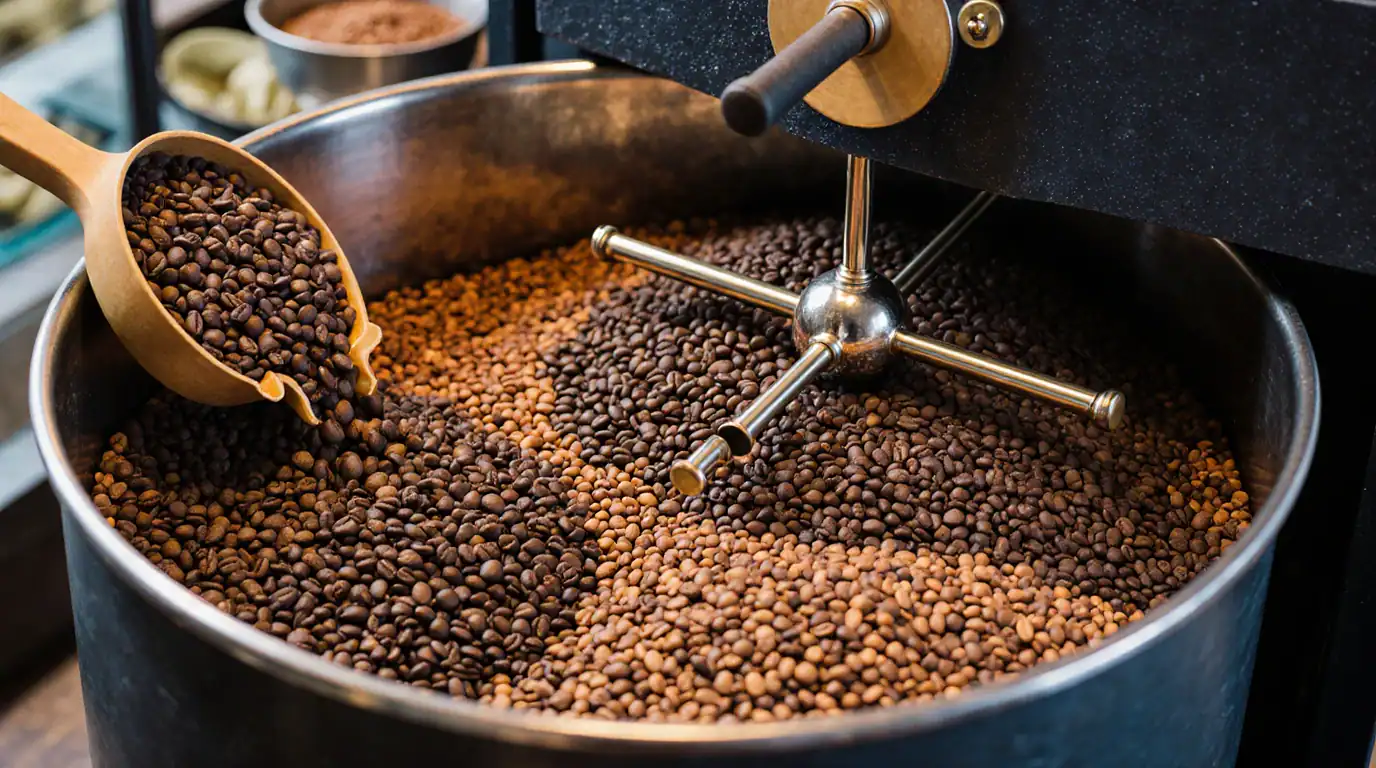
Coffee roasting is where the magic happens. It’s the bridge between the farm and your cup. If you’ve ever wondered why some coffee tastes like blueberries while another tastes like burnt toast, the answer usually lies in the roast.
At RoastRig, we believe roasting isn’t just for professionals in lab coats. It’s a craft that anyone can learn, but it does require understanding the science behind the heat. Whether you are looking to roast your own beans at home or just want to buy better bags from your local cafe, understanding this process changes how you drink coffee.

Coffee Roasting Defined
Let’s keep it simple: Coffee roasting is the application of heat to green coffee seeds to transform them into the aromatic, brown, soluble beans we grind and brew.
Before roasting, coffee beans are green, dense, and smell a bit like grass or hay. If you ground them up and added hot water, you’d get a terrible, vegetal tea—not coffee. Roasting triggers massive chemical changes that unlock the flavors we love.
The Science (Simplified)
You don’t need a chemistry degree, but you should know two terms:
- The Maillard Reaction: Starting around 300°F (150°C), amino acids and sugars react to create hundreds of flavor compounds. This is the same reaction that turns bread into toast or sears a steak.
- Caramelization: As heat increases, the natural sugars in the bean break down and brown, creating sweet, nutty, and caramel notes.
The Coffee Roasting Process: Step-by-Step

Roasting typically takes between 10 and 20 minutes, depending on the machine and the desired outcome. Here is the roadmap every bean follows.
1. The Drying Phase (Green to Yellow)
Green coffee contains about 10-12% moisture. You can’t brown the bean until that water is gone. In this phase, the beans absorb heat (endothermic), turn a pale yellow, and smell like hay or wet cardboard. This usually lasts 4–8 minutes.

2. The Browning Phase (Yellow to Brown)
Once the water evaporates, the roast speeds up. The Maillard reaction kicks in, and the beans start to turn light brown. Aromas shift to toasted bread or grain.
3. First Crack (The “Pop”)
This is the most critical moment. Around 385°F–405°F (196°C–205°C), the pressure of steam and CO2 inside the bean becomes too great, and the cellular structure fractures. It sounds exactly like popcorn popping.
Pro Tip: You must hear this. The moment First Crack starts, the bean is technically “roasted” and drinkable.
4. The Development Phase
This is the time between First Crack and the end of the roast. This is where you decide the flavor profile:
- Short development: Preserves acidity and fruitiness (Light Roast).
- Long development: Mutes acidity, increases body, and adds roast flavors (Medium/Dark Roast).
5. Second Crack
If you keep roasting, you’ll hit Second Crack around 435°F–450°F (224°C–230°C). It sounds like Rice Krispies in milk—a rapid, subtle snapping. This is the territory of dark roasts.
Roast Levels Explained
| Roast Level | Appearance | Flavor Profile |
|---|---|---|
| Light | Light brown, matte, dry | High acidity, fruity, floral, tea-like |
| Medium | Medium brown, dry | Balanced, caramel, rounded acidity |
| Dark | Black/Shiny, oily | Smoky, charred, bold, bittersweet |
The “Origin” Trade-off: Take an Ethiopian Yirgacheffe. Roast it light, and you taste blueberries and lemon. Roast it dark, and those notes disappear—it just tastes like “roast,” smoky and bitter, virtually identical to any other dark-roasted bean.
Myth Buster: Dark roasts do not have more caffeine. Light roasts are denser and technically have slightly more caffeine by volume. However, the difference is negligible in your daily cup.
Common Roasting Mistakes (And How to Avoid Them)
- Baking (Stalled ROR): When the temperature curve flattens out. Result: Flat, grainy, bread-like coffee. Fix: Keep your heat momentum moving forward.
- Scorching: Burning the outside before the inside is done. Result: Ashy, harsh bitterness. Fix: Lower your starting (charge) temperature.
- Under-Developing: Dumping the beans too early. Result: Grassy, sour, vegetal taste. Fix: Let the roast run for at least 60–90 seconds after First Crack begins.
Why Freshly Roasted Coffee Matters

The Degassing Period
Coffee is full of CO2 immediately after roasting. If you brew it too soon, it tastes metallic.
- Filter Coffee: Best 3–7 days after roasting.
- Espresso: Best 7–14 days after roasting.
How to Store Roasted Coffee
- Use an airtight container (Oxygen is the enemy).
- Keep it in a cool, dark place (Not the fridge! Moisture and odors ruin the beans).
- Buy/Roast in small batches to finish within 2–3 weeks.
Getting Started with Coffee Roasting
Is home roasting for you?
- Yes: If you love DIY, want to save 50% on bean costs, and crave the freshest cup possible.
- No: If you hate smoke (it gets smoky!) or don’t like cleaning up “chaff” (the papery skin that sheds during roasting).
Recommendation: Start with a $25 air popcorn popper (like the Nostalgia or West Bend). If you get hooked, upgrade to a dedicated machine like the Fresh Roast SR540 later.
FAQ
How long does it take?
10–15 mins in a drum roaster; 5–8 mins in an air popper.
Is it legal at home?
Absolutely. It’s a safe, rewarding kitchen hobby—just ensure you have good ventilation!
Why do beans crack?
Internal steam and CO2 pressure build up until the bean structure “pops.”
Do I need special gear?
Nope. A Whirley-Pop stovetop maker or air popper works great for beginners.
Conclusion
Roasting is a balance of art and thermodynamics. By understanding the chemical changes happening in the drum, you can stop guessing and start drinking the coffee you actually like. Ready to give it a shot? Grab some green beans and listen for the crack.