If you’ve ever tried to power through a three-hour deep work session fueled by hotel lobby sludge, you know the struggle. For digital nomads and remote workers, coffee isn’t just a luxury; it’s a productivity anchor. But relying on local cafes in 2026 is becoming trickier—cafes in major digital nomad hubs across Europe are increasingly restricting laptop use, and sometimes you just need to grind out work in your Airbnb without hunting for a seat with an outlet.
The solution is becoming your own barista. But this presents a unique challenge for the remote worker: how do you build a kit that fits in a carry-on, produces excellent coffee, and doesn’t sound like a jet engine while your partner is on a Zoom call three feet away?
I’ve tested the latest gear to find the setups that actually work for the working traveler. Here is the best portable coffee gear for 2026.
What to Consider When Choosing Travel Coffee Gear

When you are living out of a suitcase, every item needs to earn its rent. Here is the criteria for remote work coffee gear:
- Size and Weight: If it doesn’t fit easily in a backpack or carry-on, it’s going to get left behind eventually. We’re looking for nesting capabilities and lightweight materials.
- Power Independence: International voltage is a headache. Gear that is manual or powered by USB-C (the 2026 standard for everything from laptops to grinders) is preferred over proprietary plugs that require bulky converters.
- Durability: Your gear will get jostled in overhead bins and tossed into trucks. Glass is out; stainless steel and Tritan plastic are in.
- Noise Level: This is the remote worker’s specific metric. Can you grind beans at 6:00 AM without waking your roomie, or brew a cup mid-morning without interrupting a colleague’s video call?
- Brewing Speed: You have five minutes between meetings. Choose brewers that work with your schedule, not against it.
- Cleanup Speed: You need a brewer that cleans up fast, not one that requires a deep scrub in a tiny hotel bathroom sink.
Portable Coffee Grinders
You cannot skip the grinder. Pre-ground coffee loses a significant amount of aroma and flavor within minutes of grinding. Freshly ground beans are the single biggest factor in cup quality.
Manual Grinders (The Remote Work Standard)
Hand grinders are the best choice for travelers. They are quiet, battery-free, and TSA-friendly.
1. 1Zpresso Q-Air or Q2

This is widely considered the gold standard for travel. The Q-Air is the newer, lighter sibling, weighing just around 360g.
- Why it works: It is small enough to fit inside the plunger of an AeroPress, saving massive space.
- Handle Storage: The folding handle mechanism prevents the common “handle fell off in my bag” disaster that plagues cheaper grinders.
- The Work Context: It is exceptionally consistent and reasonably fast. The heptagonal burrs chew through beans quickly, so you aren’t cranking for five minutes before your stand-up meeting.
2. Timemore C3 Fold

If you want great value, the Timemore C3 is hard to beat. The “Fold” version features a handle that clicks down against the body, making it much easier to pack without losing parts.
- Pros: Fast grinding, durable metal body, and the folding handle prevents the “Tetris” game when packing your tech pouch.
- Noise Level: Relatively quiet. Much softer than an electric blade grinder, allowing for grinding in shared co-living spaces.
- Handle Design: The magnetic catch keeps the handle secure during transit—a small detail that makes a huge difference.
3. Kingrinder P Series

A solid budget option that has largely replaced older recommendations like the Hario Mini Mill. It offers steel burrs at a price point that won’t ruin your month if you accidentally leave it in a hostel.
- Who it’s NOT for: If you’re chasing espresso-level precision or planning to use this daily for years, invest in the 1Zpresso tier. The Kingrinder is best for filter coffee and travelers who prioritize affordability.
Electric Option: OutIn Fino

If you have repetitive strain issues or just hate hand cranking, the OutIn Fino is a portable electric grinder that charges via USB-C. It’s compact, but keep in mind that electric grinding is always louder than manual, which might limit when you can use it in thin-walled accommodations.
Portable Brewing Devices

1. AeroPress Go (The All-Rounder)

The AeroPress has long been the king of travel coffee. The AeroPress Go model solves the biggest complaint of the original by packing the brewer into its own travel mug, making it even more compact.
- Work Context: It is virtually indestructible and cleans up in seconds by popping the “puck” into the trash. You can brew a strong cup between calls in about two minutes (30 seconds grind + 90 seconds brew).
- Versatility: With the Flow Control Cap or Prismo attachment, it handles espresso-style shots (for lattes) or standard filter coffee equally well. Without these accessories, the standard cap allows water to drip through prematurely—these upgrades give you full control over immersion time.
- Why this works: Single-device versatility eliminates the need to pack multiple brewers.
Brewing Time: 2 minutes total
2. Wacaco Picopresso (For Espresso Purists)

If your productivity depends on true espresso, this is the tool. Unlike its predecessor (the Nanopresso), the Picopresso uses a non-pressurized basket, meaning it requires a good grinder and some skill.
- Pros: Produces genuine café-quality espresso with crema. Tiny form factor.
- Cons: It has a learning curve and requires manual pumping. Not for the “I need caffeine in 30 seconds” crowd.
- Work Context: Plan for 4-5 minutes including pre-heating and pumping—ideal for a focused morning ritual, not a quick break between back-to-back meetings.
Brewing Time: 4-5 minutes
3. OutIn Nano (The “Lazy” Option)

This device heats the water for you. Powered by a battery, it takes cold water and turns it into espresso in about 3-4 minutes.
- Work Context: Perfect for van lifers or train travel where you don’t have access to a kettle. It’s a one-button solution: press start, answer an email, and your coffee is ready.
- Downside: It’s heavy (battery weight) and needs USB-C charging after every 4-5 shots.
Brewing Time: 3-4 minutes
4. MiiR Pourigami or Munieq Tetra Drip
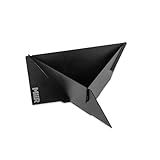
For pour-over lovers, these flat-pack drippers are unbeatable. The Pourigami consists of three interlocking steel plates that fit in your back pocket.
- Pros: Zero mechanical parts to break, weighs almost nothing.
- Cons: Requires more attention and a goose-neck kettle (or a very steady hand) to get a good result.
- Work Context: Best for morning routines, not quick coffee breaks. Requires 6-8 minutes of active attention.
Brewing Time: 6-8 minutes
5. Moka Pot (The Airbnb Workhorse)

If you’re staying in an Airbnb or rental with a stovetop for a week or longer, the classic Bialetti Moka Pot is unbeatable for simplicity and durability.
- Pros: Zero moving parts, produces strong coffee, costs under $30, virtually indestructible.
- Work Context: Set it on the stove while you check emails—it alerts you with a gurgle when ready. Perfect for the “slowmad” lifestyle.
- Downside: Requires a heat source, so not suitable for hotels without kitchenettes.
- Who this is for: Extended-stay travelers (1+ month) who have kitchen access and want a zero-tech solution.
Essential Accessories
1. Portable Scale
Eyeballing coffee ratios is a recipe for disappointment.

- Timemore Black Mirror Nano or Acaia Pyxis: These scales are small enough to fit on the drip tray of a portable espresso maker. In 2026, ensure you get one with USB-C charging so you don’t have to hunt for batteries in a foreign bodega.
2. Water Heating

- Dual-Voltage Travel Kettle: If you have the luggage space, a collapsible silicone kettle (like those from Loutytuo) that switches between 110V and 220V is a lifesaver.
- Immersion Heater: For the ultralight traveler, a 300W immersion rod boils water directly in your mug. Warning: These must be submerged before plugging in to avoid burning out the element—a common rookie mistake.
3. Water Quality Solutions

Water is the biggest variable in travel coffee. Hard tap water in London or chlorinated water in major US cities can ruin your brew.
- Third Wave Water Packets: These tiny stick packets add the perfect mineral balance to distilled water. If you can’t find distilled water, using these in conjunction with a Brita filter bottle can salvage tap water.
- Lotus Water Drops: A lighter alternative if you’re counting grams in your pack.
Regional Water Guide:
- High chlorine cities (most US cities, parts of Spain): Always use bottled water or filter first
- Hard water regions (London, Amsterdam): Mineral packets are essential to prevent chalky taste
- Safe tap water (Iceland, Norway, parts of Switzerland): You can often brew directly from tap
4. Portable Coffee Storage

Don’t rely on the bags beans come in; the valves often fail in luggage. Use a vacuum-sealed canister like the Fellow Atmos (small size) or even a simple airtight “stash” jar to keep beans fresh and prevent coffee dust from exploding into your clothes.
5. Travel Cleaning Kit
Hotel sinks are disgusting, and you don’t want to rinse your AeroPress where someone brushed their teeth. Pack:
- Tiny dropper bottle of dish soap (refillable travel size)
- Microfiber cloth or small sponge
- Denture cleaning tablets (like Polident): These come in TSA-friendly foil strips and are specifically designed for safe oral contact, making them perfect for deep-cleaning travel mugs and brewers. They fizz away coffee oils just like dishwasher tablets but without the harsh chemical residue concerns. Pack them in a small zip bag to prevent crumbling.
Pro Tip: Drop one denture tablet in your mug with boiling water and let it sit for an hour to deep clean it without a bottle brush. Rinse thoroughly and you’re good to go.
Complete Setup Recommendations by Travel Style

The Minimalist (Carry-on only, under 2 lbs)
- Brewer: AeroPress Go (packs into its own cup)
- Grinder: 1Zpresso Q-Air (fits inside the AeroPress)
- Water: Immersion heater coil
- Accessories: Third Wave Water packets
- Weight: Under 2 lbs
- Why this works: Everything nests together, TSA-friendly, and you can brew quality coffee anywhere with hot water access.
- Best for: Fast-paced travel, hopping between hotels.
The Quality Optimizer (Checked bag okay, 3-5 lbs)
- Brewer: AeroPress Go + Flow Control Cap
- Grinder: 1Zpresso JX-Pro
- Scale: Timemore Black Mirror Nano
- Kettle: Collapsible travel kettle
- Accessories: Third Wave Water packets, cleaning kit
- Why this works: You get café-quality precision with the versatility to brew both espresso-style and filter coffee.
- Best for: 1-2 week trips, Airbnbs, quality-focused remote workers.
The Espresso Specialist
- Brewer: Wacaco Picopresso
- Grinder: 1Zpresso J-Ultra (fine adjustment for espresso)
- Scale: Timemore Black Mirror Nano
- Accessories: Water minerals, cleaning kit
- Why this works: Uncompromising espresso quality in a portable package—no drip coffee compromises.
- Best for: Digital nomads settled in one city for a month who refuse to drink drip coffee.
The Autonomous Nomad (Van Life / Train Travel)

- Brewer: OutIn Nano (Self-heating)
- Grinder: Timemore C3 Fold
- Why this works: Zero reliance on external power or hot water—brew anywhere, anytime.
- Best for: Situations where finding hot water is the biggest hurdle.
The Hybrid Remote Worker
- Brewer: AeroPress Go + Flow Control Cap
- Grinder: Timemore C3 Fold
- Accessories: Portable scale, Third Wave Water packets
- Why this works: One brewer handles espresso shots in the morning and filter coffee in the afternoon without carrying multiple devices.
- Best for: Workers who want maximum versatility in minimum space.
The Extended Stay / Airbnb Setup (1+ month)
- Brewer: Moka Pot (Bialetti 3-cup)
- Grinder: Timemore C3 Fold
- Accessories: V60 or small pour-over for variety, water filter pitcher
- Why this works: Kitchen access means you can use zero-tech, bombproof equipment and buy local beans.
- Best for: Slowmads settling into one location with full kitchen facilities.
Pro Tips for Coffee on the Road

Gear Drying Protocol
Before you pack your gear for a flight, ensure it is bone dry. A damp AeroPress or grinder inside a dark bag is a breeding ground for mold. Disassemble your brewer and let it air dry on a towel the night before you fly.
Noise Management
If you are working from a quiet Airbnb or a co-living space, the sound of an electric grinder can be jarring. Manual grinders are significantly quieter. If you must grind during work hours, step into the bathroom or wrap the grinder in a towel to dampen the sound—your roommates will thank you.
Brewing Between Meetings: The Time Chart
- AeroPress: 2 minutes total (30s grind + 90s brew)
- Picopresso: 4-5 minutes (includes pre-heating and pumping)
- Pour-over: 6-8 minutes (requires attention throughout)
- Moka Pot: 5-7 minutes (hands-off after setup)
- Avoid French Press if you have back-to-back calls—coffee gets bitter if it sits in the press.
The USB-C Ecosystem
In 2026, proprietary chargers are dead weight. Ensure your electric grinder, scale, and even your heated mug all run on USB-C. This allows you to use your laptop charger for your coffee gear, reducing cable clutter.
Bean Storage
Don’t rely on the bags beans come in; the valves often fail in luggage. Use a vacuum-sealed canister like the Fellow Atmos (small size) or even a simple airtight “stash” jar to keep beans fresh and prevent coffee dust from exploding into your clothes.
What NOT to Bring
- Glass French Presses: They will break. It is not a matter of if, but when.
- Full-size Electric Kettles: Unless you are moving to one location for 3+ months, they take up too much space.
- 110V Appliances to 220V Countries: Even with a converter, heating elements often struggle or burn out. Stick to dual-voltage or manual gear.
- Proprietary Chargers: In 2026, if it doesn’t charge via USB-C, leave it home. You don’t have room for brand-specific power bricks.
Conclusion
You don’t have to choose between traveling the world and drinking exceptional coffee. With a lightweight manual grinder and a durable brewer like the AeroPress or Picopresso, you can maintain a high-quality morning ritual that anchors your day and fuels your work. Start with the basics—grinder and brewer—and expand your kit as you learn what your travel style demands.
What is the one piece of coffee gear you regret bringing on the road?