

Let’s cut right to the chase: for most people, Arabica tastes better because it is smoother, sweeter, and far less bitter than Robusta.
If you are brewing a standard cup of coffee at home and want a pleasant, complex flavor, Arabica is the clear winner. But that does not mean Robusta is useless. Robusta is the bean you choose when you want more caffeine, a stronger punch, or a lower cost.
In this guide, we’ll break down the key Arabica vs Robusta differences so you know exactly what to buy. Whether you are pulling shots of espresso or making a simple morning drip, here is everything you need to know to get the best cup possible.
Quick Verdict
- Best for flavor: Arabica
- Best for caffeine: Robusta
- Best for espresso: Arabica/Robusta Blend
- Best for budget: Robusta
- Best for beginners: Arabica
Arabica vs Robusta at a Glance
| Feature | Arabica | Robusta | Blend |
|---|---|---|---|
| Flavor | Smooth, sweet | Bitter, strong | Balanced |
| Caffeine | ~1.5% | ~2.7% | Medium |
| Acidity | Higher | Lower | Medium |
| Aroma | Complex | Simple | Balanced |
| Price | Higher | Lower | Medium |
| Crema | Light | Thick | Good |
| Best Use | Specialty coffee | Strong blends | Espresso |
For Most People, Arabica Is the Better Choice

Arabica beans contain almost 60% more lipids (fats) and nearly twice the sugar concentration of Robusta. This chemical makeup is exactly why Arabica tastes so much better to the average coffee drinker.
When those sugars roast, they create a brew that is smooth, slightly sweet, and virtually free of harshness. You will often pick up complex flavor notes like chocolate, caramel, berries, and bright florals. Because of this, Arabica dominates the specialty coffee market. If you are curious how roasting actually transforms these sugars, our guide on what is coffee roasting explains the process in detail.
If you’re unsure, start with Arabica — you’ll get a better experience 9 times out of 10.
When Robusta Actually Makes Sense
Robusta gets a lot of hate, but it serves a very specific purpose. It has roughly double the caffeine of Arabica, coming in at around 2.2% to 2.7%. Because it has less sugar and more caffeine, it tastes noticeably bolder, earthier, and sometimes woody.
It also produces a massive, thick layer of crema when pulled as an espresso, thanks to its specific cellular structure and lower oil content. Reach for Robusta when you need a serious wake-up call, a cost-effective filler bean, or a heavy base for milk drinks.
Robusta is a tool — not the default.
Which One Tastes Better in Real Life?
Arabica: In your mug, Arabica is going to taste sweeter, fruitier, and smoother. It has a clean finish that does not coat your tongue in bitterness.
Robusta: Robusta is bitter, earthy, and heavy. If your coffee has ever tasted burnt, harsh, or slightly like rubber, it likely had a high Robusta content.
Strong does not mean better — most people prefer smooth over harsh. That “strong coffee” taste many people associate with cheap diner coffee is often just the intense bitterness of commodity-grade Robusta. There are quite a few coffee myths built around the idea that bitter equals strong and strong equals quality — it does not.
Arabica vs Robusta for Espresso

Why Robusta is used: Traditional Italian espresso blends rely heavily on Robusta. It adds a thick, stable crema, a heavy body, and a punchy flavor that cuts right through milk.
Why Arabica dominates: Modern specialty coffee shops prefer Arabica for espresso because the taste is simply better. It offers far more aroma and significantly less bitterness.
When blends win: An espresso blend featuring mostly Arabica with a small addition of Robusta (around 10% to 20%) gives you the best of both worlds — rich crema and body from the Robusta, balanced by the sweet, complex flavor of the Arabica.
Recommendations:
- Beginners: Stick to Arabica-dominant blends. They are much more forgiving on entry-level espresso machines. The Breville Barista Express is a great starting point, and pairing it with a quality burr grinder under $200 will make a noticeable difference in extraction quality.
- Strength lovers: Grab an Italian-style blend with Robusta if you love traditional, heavy espresso with thick crema.
Best Arabica vs Robusta Beans (Top Picks)
The beans below represent the best of each category. Click the links to check current prices and availability.
Best Arabica Beans
- Best overall (smooth + balanced): Volcanica Colombian Supremo — a medium roast with notes of milk chocolate and caramel. The ultimate everyday drinker.
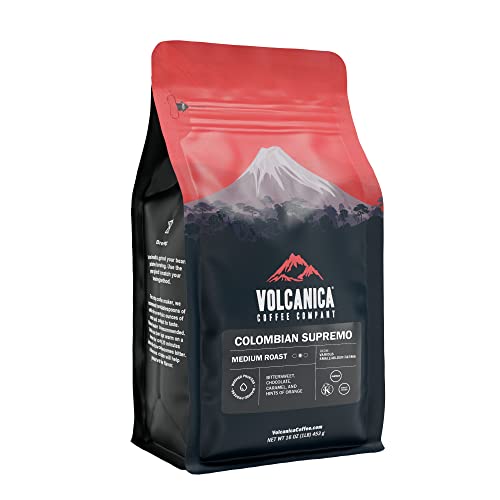 Colombian Supremo Coffee, Whole Bean, Fair Trade, Fresh Roasted, 16-ounce
- Loved by people all over the world, Colombian Supreme Coffee beans have the perfect balance of sweetness, acidity and a heady nutty aroma. It has all the characteristics of your favorite cup of gourmet coffee but at the same time, it is not overpowering. This Colombian Supremo Estate Coffee is shade grown
- TESTED FOR MOLD, QUALITY AND SAFETY: Our coffee undergoes rigorous phytosanitary testing before export and lab analysis upon arrival to check for mycotoxins and mold. We then roasted at over 400°F, this meticulous process guarantees a fresh, safe, and impurity-free coffee experience.
- Flavor Notes: Bittersweet, Chocolate, Caramel, and Hints of Orange
- Medium roasted whole beans allows the true flavor characteristic to come through for a remarkable taste.
- Fresh roasted then immediately packed and sealed to assure freshness
- Best budget Arabica: Café Don Pablo Brazilian Cerrado Natural — low acidity, heavy body, affordable, and crowd-pleasing.
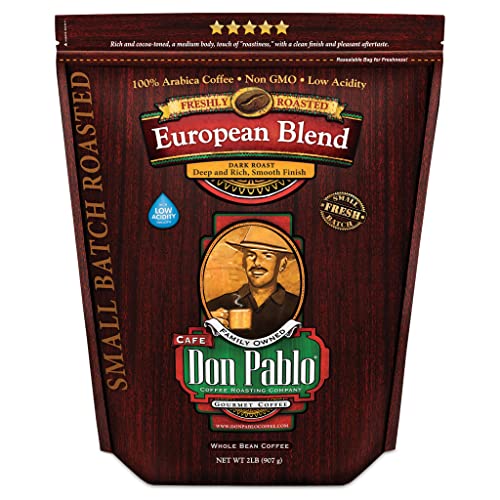 Don Pablo European Blend - Dark Roast Gourmet Coffee - 100% Arabica Whole Bean, Non-GMO, Low Acidity, 907g (2LB) Bag
- Don Pablo's Unique Blend: Experience the perfect dark roast, masterfully blended from premium Colombian, Honduran, and Brazilian beans for a deep, richly layered flavor.
- Premium Dark Roast – 100% Arabica Coffee Beans: Exclusively sourced from the top 2% of non-GMO Arabica beans, our dark roast is expertly crafted to unveil a rich and satisfying coffee experience. Perfect for discerning coffee lovers.
- Deep, Rich & Intricately Balanced: A complex flavor profile with bright citrus highlights and luxurious dark chocolate notes. This blend offers a cocoa-toned finish that is exceptionally smooth, marked by its low acidity.
- Naturally Sweet & Complex: Roasted to fully caramelize natural sugars, creating a chocolatey richness with deep, lingering notes.
- Artisan Roasted in Small Batches: Each batch is roasted in small quantities for peak freshness and top quality.
- Best for espresso: Intelligentsia Black Cat Espresso — a bright, fruity Ethiopian and Central American blend layered over a sweet, chocolatey base.
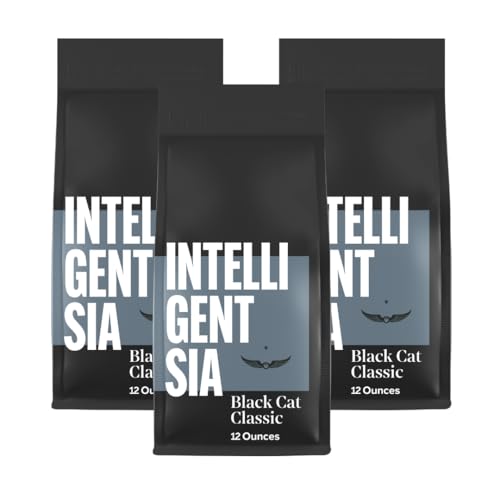 Intelligentsia Coffee, Light Roast Whole Bean Coffee - Black Cat Classic Espresso 36 Ounces (3 Bags of 12 Ounces)
- Contains three (3) 12 Ounce Bags of Intelligentsia Black Cat Classic Espresso Whole Bean Coffee.
- Black Cat Classic Espresso: This syrupy sweet espresso blend has been the staple of our lineup since the very beginning. Supreme balance and a wonderful sweetness make our Black Cat Espresso truly a classic
- Direct Trade: Our commitment to direct trade allows us to cut out unnecessary importers and exporters, and enables us to truly partner with our growers to bring you the sweetest coffees in the world
- How to Brew: For espresso, we recommend a fine grind and your finished espresso should weigh 2.5 times as much as your coffee dose, which provides an excellent total extraction and maximizes flavor
- Seasonality: The components of our blends change throughout the year to incorporate new arrivals. We ensure freshness and optimize quality while the profiles remain consistent
Best Robusta and Blends
- Best pure Robusta (max strength): Trung Nguyen Vietnamese Fine Robusta — a dark roast delivering a massive caffeine punch with deep notes of dark cocoa and spice.
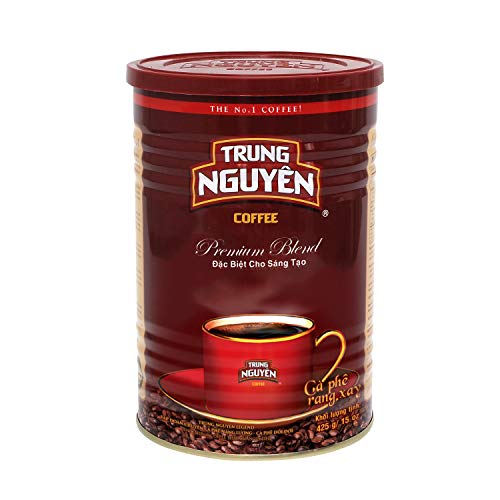 TRUNG NGUYEN LEGEND PREMIUM BLEND Premium Roasted Ground Coffee - Intense Flavor and Chocolate Fragrant by Robusta & Arabica Coffee Beans Blend - Full City Roast with Low Acidity (425g/Can)
☕ BRAIN ABILITY AND CREATIVITY INCREASE. With exclusive recipe, TRUNG NGUYEN LEGEND Premium Blend not only bring you a quality cup of coffee but also a special energy that keeps you concentrate on brainstorming, discovering and inspiring your creativity potential.
☕ VIETNAMESE BLEND. By using Vietnamese traditional roasting technique create an authentic and native taste that stimulates your sense. A combination of Arabica, Robusta, Catimor, Excelsa coffee for those enjoy rich flavor, daily coffee drinking.
☕ BOLD & STRONG AROMA. Premium Blend has full city, attractive flavor, bold, strong and lasting aroma, give an ideal cup for all day.
☕ THE ENERGY COFFEE THAT CHANGES LIFE. With exclusive recipes, TRUNG NGUYEN LEGEND Premium Blend brings you not only a quality cup of well-prepared beverage but also special energy keeping you concentrate on brainstorming, discovering and boosting your creativity potential.
☕ PREMIUM PRESENTS. Smart package design makes a perfect present reserved for the ones who are coffee connoisseurs. Also favorite gifts for high-class partners and superior events.
- Best Arabica–Robusta blend: Lavazza Super Crema (80/20 Italian Espresso Blend) — thick, gorgeous crema without sacrificing taste.
 Lavazza Super Crema Whole Bean Coffee, Medium Espresso Roast, Arabica and Robusta Blend, 2.2 lb Bag (Pack of 3)
- SUPER CREMA: A 2.2 lb whole bean coffee bag ideal for espresso preparation. (Pack of 3)
- INTENSITY AND ROAST: This full-bodied medium roast offers a bold and creamy finish.
- BLEND: Made from Arabica and Robusta beans, this naturally caffeinated blend is sourced from 15 coffee-growing countries around the world.
- BREWING GUIDE FOR SINGLE ESPRESSO: 0.28oz of ground espresso, delivers 1oz of espresso shot.
- INGREDIENTS: Lavazza Super Crema contains only coffee, and is produced in facilities that exclusively make coffee.
- Best cheap strong coffee: Café Bustelo Espresso Blend — ideal for cold brew, where a long steep mellows Robusta’s harshness into a bold, smooth concentrate.
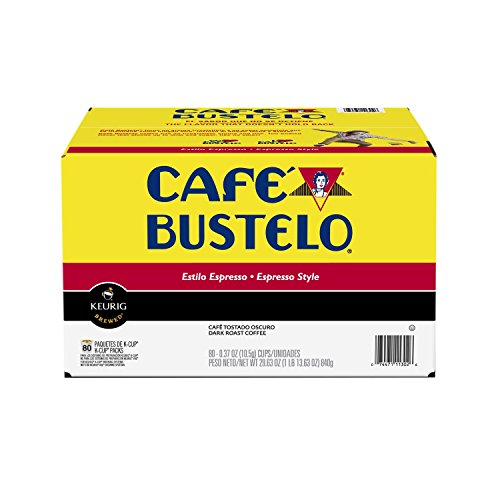 Café Bustelo Espresso Style (80 K-Cups) (pack of 2)
- total: 160 K-Cups
- Espresso style
- 100% dark roast coffee
- Kosher
Want smooth, easy coffee? Start with the Volcanica Colombian. Want stronger coffee with more punch? Try the Lavazza Super Crema blend.
Why Is Robusta Cheaper?
Robusta is incredibly easy to farm. It grows at low altitudes (from sea level up to 800 meters) and handles hot, humid climates with ease. Because it naturally contains so much caffeine, it repels pests and resists diseases like coffee leaf rust without the need for expensive intervention.
It also yields significantly more coffee cherries per tree than Arabica. The result is a bean that costs less to produce at every stage of the supply chain.
Robusta is cheaper because it is easier to produce — and usually harsher in the cup.
Why Most Supermarket Coffee Uses Robusta
If you buy a cheap can of ground coffee at the grocery store, you are almost certainly drinking Robusta. Large brands use it purely for cost reduction. The bold, bitter taste masks the fact that the beans are of lower quality, and it holds up well during the intensive processing required to make instant coffee.
That “strong coffee” taste is often just bitterness from Robusta — not quality, not complexity, just caffeine and chlorogenic acids doing their thing.
Can Robusta Taste Good?
Yes — but it is rare. There is a growing movement called “Fine Robusta,” which grades beans on a strict 100-point scale through the Coffee Quality Institute (CQI). When farmed and processed with the same care as specialty Arabica, Fine Robusta can taste like dark cocoa, caramel, and roasted hazelnuts with a sweet, lingering finish.
However, finding this level of quality is difficult for the average consumer. Most Robusta on the market is commodity-grade.
Good Robusta exists, but most people will still prefer Arabica.
Arabica vs Robusta for Beginners
If you are new to buying whole beans and exploring brewing methods like the French press, use this simple decision guide:
- Want smooth coffee? → Choose 100% Arabica
- Want strong or cheap coffee? → Choose a Robusta blend
- Want thick espresso? → Choose an Arabica/Robusta blend
Best Uses by Drinking Style
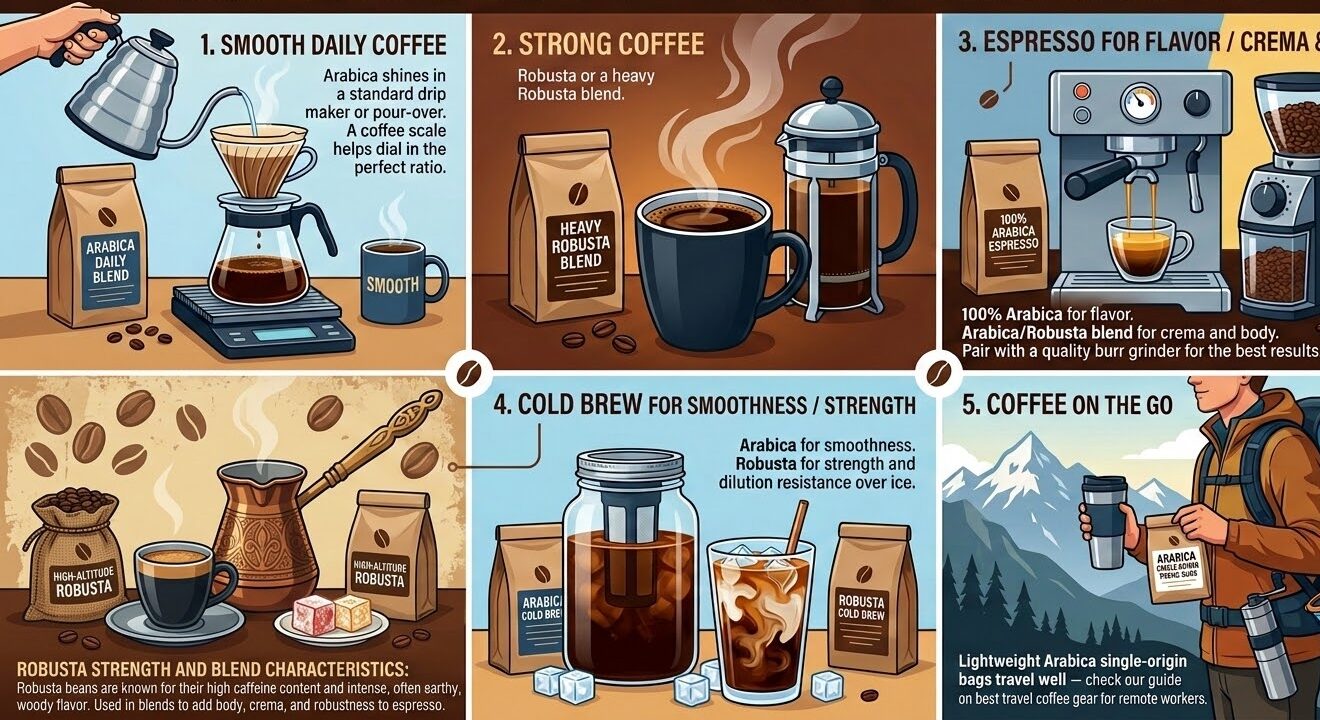
- Smooth daily coffee: Arabica — it shines in a standard drip maker or pour-over. A coffee scale helps you dial in the perfect ratio.
- Strong coffee: Robusta or a heavy Robusta blend.
- Espresso for flavor: 100% Arabica. For crema and body: an Arabica/Robusta blend. Pair with a quality burr grinder for the best results.
- Cold brew for smoothness: Arabica. For strength and dilution resistance over ice: Robusta holds up better than Arabica when diluted.
- Coffee on the go: Lightweight Arabica single-origin bags travel well — check our guide on best travel coffee gear for remote workers.
Arabica vs Robusta and Roasting
Arabica: Arabica beans are highly expressive at light and medium roast levels. A lighter roast allows the unique, fruity flavors of the bean’s origin to shine through. If you want to understand what is actually happening inside the drum, our coffee roasting guide covers the chemistry in plain language.
Robusta: Robusta can turn harsh quickly if you do not know what you are doing. Its higher chlorogenic acid content means it requires a different roasting curve and shorter development times to avoid medicinal or rubbery off-flavors.
If you roast at home, start with Arabica. It is far more forgiving and rewarding. You may also want to explore white coffee and ultra-light roasting as an advanced step once you are comfortable with standard Arabica profiles.
FAQs
Is Arabica stronger than Robusta?
No. Robusta is much stronger in both bold, bitter flavor and actual caffeine content. Arabica is smoother and milder by comparison.
Which has more caffeine?
Robusta has nearly double the caffeine of Arabica. Robusta contains about 2.2% to 2.7% caffeine, while Arabica sits at around 1.2% to 1.5%.
Why is Robusta cheaper?
Robusta is easier to grow, thrives at lower altitudes, resists pests naturally, and produces a much higher crop yield per tree than Arabica.
Is Robusta bad quality?
Not always. While most supermarket Robusta is commodity-grade, “Fine Robusta” is a specialty grade that is carefully farmed and can taste like dark chocolate and molasses when roasted well.
Which is better for espresso?
It depends on your preference. 100% Arabica gives a sweeter, more complex flavor, while adding 10–20% Robusta to a blend provides a thicker crema and heavier body.
Can Robusta taste good?
Yes. High-quality, properly roasted Robusta can taste sweet, nutty, and chocolatey without the harsh rubbery flavors associated with cheap commercial coffee.